Working at the dangerous intersection of technology and security, social engineers help organizations stay safe(r) by exposing their vulnerabilities. Often, this relies less on advanced coding skills than it does on old-fashioned behavioral psychology and the reflexes of a trickster. In this humorous account, an infosec con artist spills her secrets.
“How I Socially Engineer Myself Into High-Security Facilities”
By Sophie Daniel
Vice
October 20, 2017

Hello! My name is Sophie and I break into buildings. I get paid to think like a criminal.
Organizations hire me to evaluate their security, which I do by seeing if I can bypass it. During tests I get to do some lockpicking, climb over walls or hop barbed wire fences. I get to go dumpster diving and play with all sorts of cool gadgets that Q would be proud of.
But usually, I use what is called social engineering to convince the employees to let me in. Sometimes I use email or phone calls to pretend to be someone I am not. Most often I get to approach people in-person and give them the confidence to let me in.
My frequently asked questions include:
What break-in are you most proud of?
What have you done for a test that you were the most ashamed of?
What follows is the answer to both of these questions. Read more.
 , in which the legendary scientist distills his years of professional skepticism into a primer for recognizing and calling BS in everyday life. H/t Dino.
 Sagan reflects on the many types of deception to which we”re susceptible “” from psychics to religious zealotry to paid product endorsements by scientists, which he held in especially low regard, noting that they “betray contempt for the intelligence of their customers” and “introduce an insidious corruption of popular attitudes about scientific objectivity.” (Cue in PBS”s Joe Hanson on how to read science news.) But rather than preaching from the ivory tower of self-righteousness, Sagan approaches the subject from the most vulnerable of places “” having just lost both of his parents, he reflects on the all too human allure of promises of supernatural reunions in the afterlife, reminding us that falling for such fictions doesn”t make us stupid or bad people, but simply means that we need to equip ourselves with the right tools against them.
 Vote Protectors, the anti-voter-fraud group hosted by
  You might be forgiven for not knowing her work — after all, she has a common name, one that she shares with other similarly successful authors on Amazon. Until this week, she had dozens of health, dieting, cooking, and weight loss ebooks to her name. She published over a dozen ebooks on Amazon this year — five ebooks alone this month. And Moore would even work with other authors — like Nina Kelly, Andrew Walker, and Julia Jackson — who have all published about a dozen ebooks each this year as well.
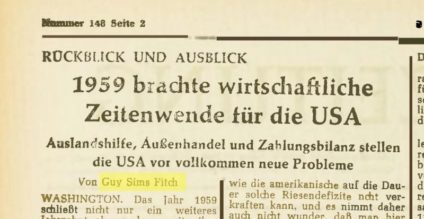 Guy Sims Fitch had a lot to say about the world economy in the 1950s and 60s. He wrote articles in newspapers around the globe as an authoritative voice on economic issues during the Cold War. Fitch was a big believer in private American investment and advocated for it as a liberating force internationally. But no matter what you thought of Guy Sims Fitch”s ideas, he had one big problem. He didn”t exist.