A “national call to creative resistance.” Join the effort to end fascism. Register your events on October 2nd, 3rd, & 4th.

…Exploring the role of the prankster as artist, activist and social observer and the significance of the prank in society.
A “national call to creative resistance.” Join the effort to end fascism. Register your events on October 2nd, 3rd, & 4th.
Remembering Kusama: In 1968, artist, Yayoi Kusama joined Joey Skaggs’ Hippie Bus Tour to Queens. In a satirical ironic reversal, the group toured neighborhoods and snapped photos of suburbanites mowing their lawns and washing their cars. When the group stopped at Hillside’s Nirvana head shop in Queens, the “Group Image” band played while Kusama painted polka dots on the naked dancers.
Read The Guardian’s Obituary here:
Yayoi Kusama, Japanese artist who became a global superstar, dies aged 97, by Tim Jonze and Sian Cain, August 26, 2026.
Challenging the status quo.
33 Banned Artworks Deemed Too Controversial for Public Exhibition, by Jaycee Gudoy, Go2Tutors, July 14, 2026.
Art has always made people uncomfortable. That’s not an accident — it’s frequently the point.
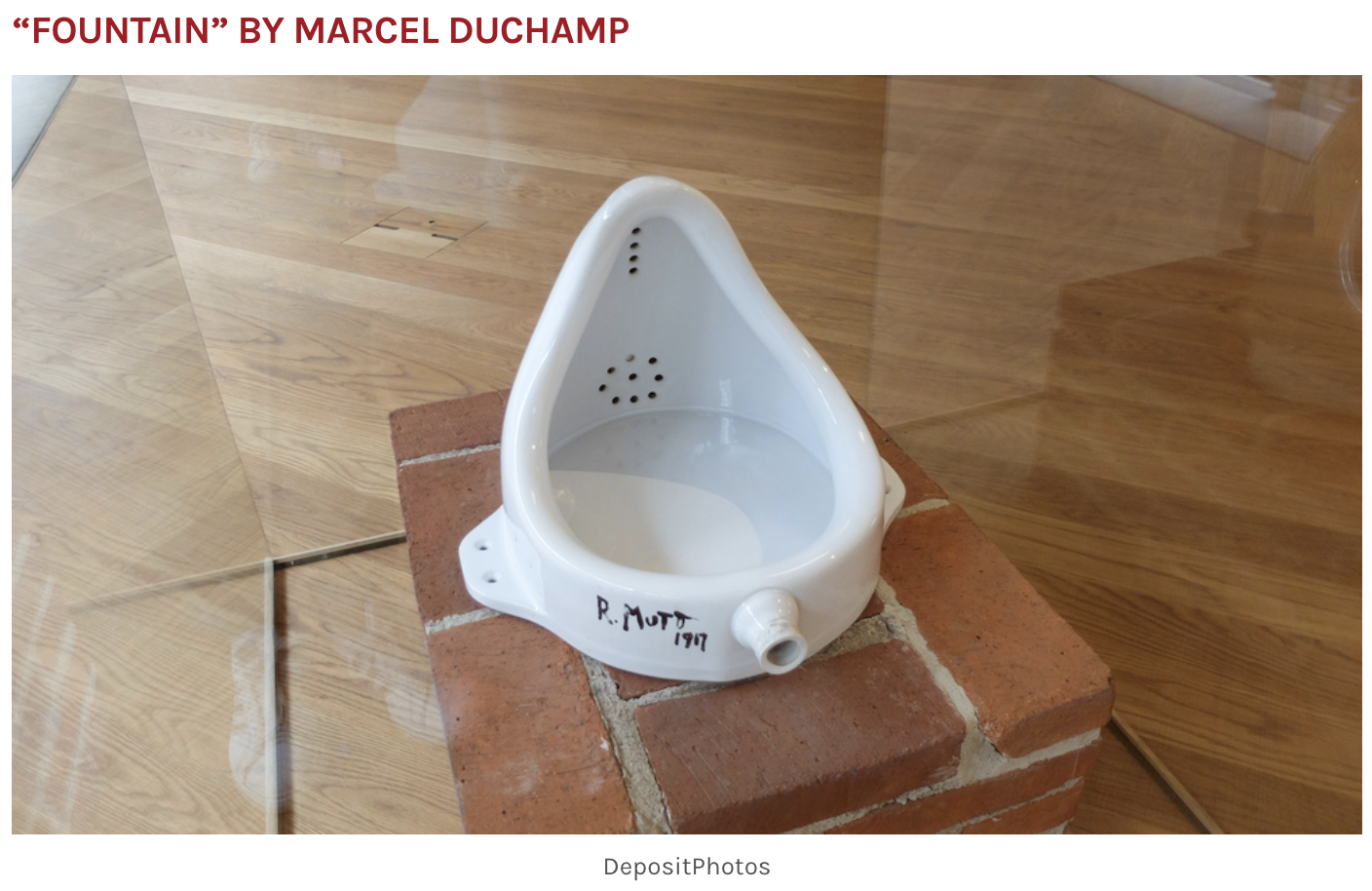
But there’s a difference between art that challenges and art that societies, governments, galleries, and institutions have decided crosses a line so completely that the public simply isn’t allowed to see it. Censored, seized, locked in storage, refused at the border, yanked from museum walls mid-exhibition: the works collected here have all been banned, suppressed, or blocked from public view at some point in history — and often for reasons that reveal far more about the censors than about the art itself.
Some of these decisions were later reversed. Many weren’t. Read the whole article here.
Environmental art. Wiring the great outdoors for unexpected cacophony.
Spooky discovery on mysterious Mount Shasta after horseback riders follow ‘apocalyptic’ sounds: ‘Summoning something’, by Ben Cost, New York Post, June 26, 2026.
Are they the horsewomen of the apocalypse?

A California woman was left shaken after discovering the eerie source of some “apocalyptic” sounds she heard on Mount Shasta. They detailed these anomalous finds in a series of videos going viral on Facebook.
Karrie Ann Snure and her daughter Jordan had been horseback riding in the area when they heard a creepy screeching noise blaring throughout the trees. Curious, the pair investigated and went off the path and into some nearby brush, whereupon they found a patch of solar-powered Bluetooth speakers jutting up from the dirt.
“This is straight apocalyptic,” Snure declared. “Someone is summoning something here.” Read the whole article here.
50 years ago on April 1, 1976, in response to a subpoena issued by the New York State Attorney General, Joey Skaggs revealed that his Cathouse for Dogs (doggy bordello) was a satirical media performance hoax.