LiteratEye #40: And Death Shall Have No Dominion, Particularly If You’re a Best-Selling Author

Here’s the fortieth installment of LiteratEye, a series found only on The Art of the Prank Blog, by W.J. Elvin III, editor and publisher of FIONA: Mysteries & Curiosities of Literary Fraud & Folly and the LitFraud blog.


LiteratEye #40: And Death Shall Have No Dominion, Particularly If You’re a Best-Selling Author
By W.J. Elvin III
November 20, 2009
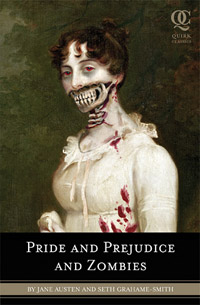
pride, prejudice, zombies200It seems a sad thing that writers who keep on pumping out books after they are dead aren’t around to enjoy the benefits. Maybe there are literary awards passed out in heaven? “Best Book By A Recently-Deceased Author.”

I got to thinking about that after learning that mystery writer and outdoor expert William G. Tapply, who had become just plain “Bill” over the course of our correspondence last year, died recently. He left several books still to be published.

What that leads into is the issue of after-death publishing, not the posthumous publication of completed works as in Tapply’s case but works produced under an author’s name but actually involving other writers.

Sometimes such books are based on partially completed manuscripts, or even derived from ideas jotted on a cocktail napkin. If that.

The issue takes some odd turns. Continue reading “LiteratEye #40: And Death Shall Have No Dominion, Particularly If You’re a Best-Selling Author”
LiteratEye #39: What Do You Want To Be When You Grow Up? Somebody Else.

Here’s the thirty ninth installment of LiteratEye, a series found only on The Art of the Prank Blog, by W.J. Elvin III, editor and publisher of FIONA: Mysteries & Curiosities of Literary Fraud & Folly and the LitFraud blog.


LiteratEye #39: What Do You Want To Be When You Grow Up? Somebody Else.
By W.J. Elvin III
November 13, 2009

“My walk will be different, my talk and my name,
Nothing about me is going to be the same”¦”

-From the song lyric, There’ll Be Some Changes Made

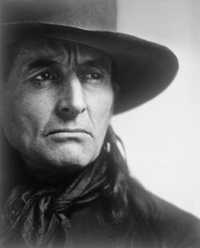
12156_Grey-Owl-200There are different kinds of imposters in the field of literary deception. There’s the trickster, such as the false-memoirist in it for the bucks. And then there’s the true believer, the re-invented person who is really into a role.
Nasdijj is a trickster. He made claims but actually had no direct experience of the Navajo life he wrote about.

Grey Owl, on the other hand, surely had a trickster streak but he was far more the true believer. He was an English boy, Archie Belaney, who wanted to be an Indian. And eventually, in outward appearance and lifestyle, he became one.

If the imposter Nasdijj has any Indian defenders, I haven’t run across them. But certainly Grey Owl does. One of them is Armand Garnet Ruffo, author of Grey Owl: The Mystery of Archie Belaney. The book is a prose poem that includes tales from Ruffo’s Ojibway relations.

Having read half a dozen accounts of Belany/Grey Owl’s life, I find the “facts” vary from one biographer to the next. Then there’s his own autobiography and other writings, which have to be taken with a pillar of salt. Continue reading “LiteratEye #39: What Do You Want To Be When You Grow Up? Somebody Else.”

LiteratEye #38: New ‘Literary Hoaxes’ Book Leaves the Curious Reader in the Dark

Here’s the thirty eighth installment of LiteratEye, a series found only on The Art of the Prank Blog, by W.J. Elvin III, editor and publisher of FIONA: Mysteries & Curiosities of Literary Fraud & Folly and the LitFraud blog.


LiteratEye #38: New ‘Literary Hoaxes’ Book Leaves the Curious Reader in the Dark
By W.J. Elvin III
November 6, 2009

There are a great many mysteries in the field of literary deception.

amberwitch-200So it is always a pleasure to learn of a new book that may shed light.

Having seen advance reviews some time ago in the British Press, I eagerly awaited the arrival of Melissa Katsoulis’ Literary Hoaxes.

Well, it’s a grand overview, a nice line-up of the usual suspects, but I’m less than delighted. Hoaxes raises many more questions than it answers, most of the questions resulting from a failure to source the tales therein.

How is it Katsoulis knows so much about William Henry Ireland, the young Shakespeare forger of the late 1700s?

Who told Katsoulis that the American Indian imposter Grey Owl was once recognized through his feathers by his very British aunts, who decided to keep their observation a secret?

And what assurance do we have that the author has her facts straight regarding Pierre Plantard’s part in creating the hoax behind Dan Brown’s Da Vinci Code?

And so on, and on.

The book has no citations, no bibliography. No index, though the table of contents serves the purpose in a basic way. There just aren’t many signposts to guide those who might want to know more about any given topic. Continue reading “LiteratEye #38: New ‘Literary Hoaxes’ Book Leaves the Curious Reader in the Dark”

LiteratEye #36- Memo to New Age Native American Wannabes: Maybe It”s Time for a Brain Dance

Here’s the thirty sixth installment of LiteratEye, a series found only on The Art of the Prank Blog, by W.J. Elvin III, editor and publisher of FIONA: Mysteries & Curiosities of Literary Fraud & Folly and the LitFraud blog.


LiteratEye #36- Memo to New Age Native American Wannabes: Maybe It”s Time for a Brain Dance
By W.J. Elvin III
October 23, 2009

LL009-200Who wouldn”t want to pop $9,695 for the opportunity to starve for a couple of days and then sit in a steamy, almost unbearably hot box for hours and hours with 50 or so other eager seekers hoping to obtain the secret to enormous wealth?

Mighty compelling. But unfortunately it recently meant death for three participants and dire illness for 18 others. The verdict isn”t in as to the exact cause but apparently the tragedy resulted from burns, dehydration, respiratory arrest and elevated body temperature.

The seekers were participating in a “sweat lodge” ritual under the direction of James Arthur Ray, author of Practical Spirituality: How to Use Spiritual Power to Create Tangible Results, and many other similar books.

The charismatic Ray, like many others who might be termed New Age gurus, bases his promises of wealth, healing and/or special powers on a concoction distilled from the mystical beliefs of many cultures. The sweat lodge, at least this particular version, is borrowed from a Native American cleansing ritual.

These New Age gurus are messing with practices that the – what, “Old Age” – cultures have maybe thousands of years experience in administering. Many of the groups that hold the rituals sacred not only resent the “theft of culture” but for many years now have been warning of horrific dangers awaiting novice practitioners. Continue reading “LiteratEye #36- Memo to New Age Native American Wannabes: Maybe It”s Time for a Brain Dance”

LiteratEye #35: Ghost Story: The Riddle of Who Wrote What

Here’s the thirty fifth installment of LiteratEye, a series found only on The Art of the Prank Blog, by W.J. Elvin III, editor and publisher of FIONA: Mysteries & Curiosities of Literary Fraud & Folly and the LitFraud blog.


LiteratEye #35: Ghost Story: The Riddle of Who Wrote What
By W.J. Elvin III
October 16, 2009

seance-200It may come as a surprise to some that Sean Connery, in his recent book, Being A Scot, provides a truly enlightening cultural history lesson.

The book, issued by Phoenix Illustrated and as yet available only as an expensive import here in the States, surveys Scottish creativity, inventiveness and history. And, since it”s autobiographical in its own quirky way, there”s the necessarily egocentric focus on Connery.

Of particular interest to armchair detectives of the LiteratEye squad is the invitation to help solve a literary mystery.

Connery presents a gloom-and-doom quote, written two hundred years ago but obviously appropriate in the present day. Sorry if it”s a bit windy and profound, it”s Sir Sean”s puzzle, not mine:

“A democracy is always temporary, and therefore cannot exist as a permanent form of government. It will only exist until the voters discover that they can reward themselves with the public treasury. From that moment on, the majority always votes for the candidates promising the most benefits from the public treasury. A democracy therefore always collapses over loose fiscal policy, which is always followed by a great dictatorship. The average age of the world”s greatest civilizations has been 200 years.”

Connery says the quote traces to the voluminous works of a fellow Scot, the historian Alexander Fraser Tytler. It was given new life in a speech by President Ronald Reagan (who, ironically, sparked massive raids on the public treasury to compensate for the economic crimes and disasters resulting from his deregulation debacles).

What Connery wants to know is just where in Tytler”s work does the quote appear? A search of Tytler archives in the U.S. and Scotland failed to turn up the exact source. Continue reading “LiteratEye #35: Ghost Story: The Riddle of Who Wrote What”