Here’s the thirty third installment of LiteratEye, a series found only on The Art of the Prank Blog, by W.J. Elvin III, editor and publisher of FIONA: Mysteries & Curiosities of Literary Fraud & Folly
LiteratEye #33: The Horror Story Byron Didn’t Write Made His Rep as a Vampire
By W.J. Elvin III
October 2, 2009
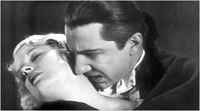 “Everywhere you look in entertainment these days, you see vampires.” It was cultural critic Johanna Schneller who stuck her neck out to make that observation, quoted in The Week magazine.
Vampires everywhere. Well, then, wouldn’t it be just the right time for a film focusing on suspicions that literature’s premier bad boy, George Gordon, Lord Byron, was a vampire?
Yes, of course, you say, the more vampires the better. And by the way, who is this GGLB character?
Byron is considered a poetic genius on par with greats like Milton or Dryden, but it is his orgiastic personal life that draws most of the attention he gets today. His work still sells – I just saw a six-volume set of his collected works on eBay. He wrote some exquisite, memorable lines – ‘She walks in beauty like the night’ – but the language of the bulk of it is undoubtedly foreign to modern readers.
It used to be, you described someone as “Byronic” and any literate person knew just what you meant. The brooding, mysterious, rebellious poet of later times is a knock-off of the image Byron created for himself.
He was the sort modern publishers hunger for, a master of manipulating his own image into a creation that fascinated the public, thereby enhancing sales of his books. Of recent authors, he calls to mind Ernest Hemingway, a writer who lived much of his legend but also made certain he got plenty of publicity as a result. Continue reading “LiteratEye #33: The Horror Story Byron Didn’t Write Made His Rep as a Vampire”
 The counter-cultural creative arts collective Wu Ming, based in Italy, evolved out of the madcap Luther Blissett phenomenon (see
 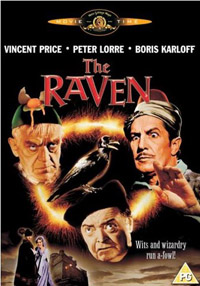 A master of macabre prose and poetry, Edgar Allan Poe”s greatest masterpiece was undoubtedly himself. Fate had its cruel influence, but to a great extent he authored his own construction and destruction.
 New York. A collection of Frida Kahlo oil paintings, diaries and archival material that is the subject of a book to be published by Princeton Architectural Press on 1 November has been denounced by scholars as a cache of fakes. Finding Frida Kahlo includes reproductions of paintings, drawings and handwritten letters, diaries, notes, trinkets and other ephemera attributed to the artist. They belong to Carlos Noyola and Leticia Fernà¡ndez, a couple who own the antique store La Buhardilla Antiquarios in San Miguel de Allende, Mexico. The publisher describes it as “an astonishing lost archive of one of the twentieth century’s most revered artists…full of ardent desires, seething fury, and outrageous humor”.
  Let’s say you had to choose, which would it be: