LiteratEye #27: The Plagiarist – A Literary Vampire?

Here’s the twenty seventh installment of LiteratEye, a series found only on The Art of the Prank Blog, by W.J. Elvin III, editor and publisher of FIONA: Mysteries & Curiosities of Literary Fraud & Folly and the LitFraud blog.


LiteratEye #27: The Plagiarist – A Literary Vampire?
By W.J. Elvin III
August 21, 2009

Twilight-PosterJordan Scott claims mega-best-selling author Stephenie Meyer stole some plot ideas for her teenage vampire romance series.

Based on particulars I’ve seen, Scott’s chances of chomping into Meyer’s colossal publishing and film cake are somewhere between slim and none.

There are similarities in the story in question, but coincidence of ideas and phrases is hardly unique in literature.

Generally speaking, plagiarism has more to do with intent than with specifics. Of course there are some blatant cases, as in the one to be discussed further along here, where material is lifted practically “as is.”

Seems like any author who hits it big – Dan Brown and A.J. Rowling come immediately to mind – attracts plagiarism charges and/or lawsuits.

And there are cases in the past – Alex Haley and Roots for instance — where charges have held up. Haley settled with Harry Courlander, author of “The African,” for $650,000.

Well, let’s move on to a case where the hijacking was indisputable. Words for the Taking: The Hunt for a Plagiarist by Neal Bowers details the relentless pursuit of a plagiarist who stole poems, changing them only slightly before sending them off to small literary magazines as his own. Continue reading “LiteratEye #27: The Plagiarist – A Literary Vampire?”
The Pynchon Hoax

Submitted by Peter Markus as seen on gawker.com:


Thomas Pynchon is No Indie Rock Groupie
by The Cajun Boy
August 12 2009

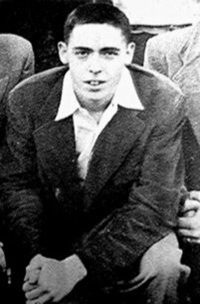
pynchon001-200In 1996 the New Yorker ran a “Talk of the Town” piece about the notoriously reclusive Thomas Pynchon becoming a huge fan of an indie rock band called Lotion, a story the magazine now acknowledges was all a hilarious hoax.

To get an idea of how all this came to be, here’s what the New Yorker’s Andrew Essex wrote about the friendship between Pynchon and Lotion in the 1996 TOTT piece:

The writer and the rockers first met in Cincinnati… After the show, the older guy, who was wearing a Godzilla shirt and ill-fitting pants, swung by to offer his compliments. He introduced himself as Tom. Jim Ferguson was reading “Slow Learner”, Pynchon’s collection of short stories. He’d left his copy backstage in a New York rock club, where Pynchon had been invited to watch the show. Pynchon saw it and asked, “Who’s reading my book?” “I said, ‘No, that’s my book,'” Jim recalls. “It didn’t register until 1 got onstage… After that, Tom began showing up at Lotion performances all over the country. An unlikely friendship was born. A year later, the members of Lotion are still a bit stunned by their guardian angel.

Recently Essex contacted the magazine to say that he and the New Yorker’s vaunted fact-checkers had been tricked by the band all those years ago. Continue reading “The Pynchon Hoax”

LiteratEye #26: How to Catch a Clever Literary Con Artist

Here’s the twenty sixth installment of LiteratEye, a series found only on The Art of the Prank Blog, by W.J. Elvin III, editor and publisher of FIONA: Mysteries & Curiosities of Literary Fraud & Folly and the LitFraud blog.


LiteratEye #26: How to Catch a Clever Literary Con Artist
By W.J. Elvin III
August 14, 2009

From The Sydney Morning Herald:
false

“OK, Norma, put down that knife”¦”

Norma Khoury, the author of a fake tragic memoir that was the topic of last week’s LiteratEye column, seems to have a few character defects beyond lying about her past. Continue reading “LiteratEye #26: How to Catch a Clever Literary Con Artist”

LiteratEye #25: A Case of Catch Me If You Can

Here’s the twenty fifth installment of LiteratEye, a series found only on The Art of the Prank Blog, by W.J. Elvin III, editor and publisher of FIONA: Mysteries & Curiosities of Literary Fraud & Folly and the LitFraud blog.


LiteratEye #25: A Case of Catch Me If You Can
By W.J. Elvin III
August 7, 2009

“All Arab men are taught that it is their responsibility to discipline the women in their lives, and that the best way to do so is corporal punishment.”

51636G4GY0L._SS500_200That’s not a true or false question, at least it didn’t start out that way. It’s a pivotal “fact” in Norma Khouri’s formerly best-selling Honor Lost: Love and Death in Modern Jordan. Internationally, with the title changed to Forbidden Love, the book was published in at least 15 countries.

Khouri presented herself as an oppressed young Jordanian woman fleeing the wrath of religion-maddened murderers. Her persecutors were ticked off because of Khouri’s part in her best friend’s very tame love affair, hardly more than a flirtation.

Under Islamic tradition and law, Khouri told readers, such carrying-on warranted killing.

A few years back, Australian journalist Malcolm Knox exposed the book as mostly imagined.

It was revealed that Khouri actually grew up in Chicago as Norma Bagain and later as Mrs. John Touliopoulos. She relocated to Australia, somewhat hurriedly due to the FBI’s desire to question her about a real estate scam.

Khouri admits to fabricating minor details and says she did so in order to protect herself and others.

Reporters and other commentators say she also made up major details. Continue reading “LiteratEye #25: A Case of Catch Me If You Can”

The Hoax Nobody Noticed

Submitted by W.J. Elvin III:


What If You Pull a Literary Hoax and Nobody Notices?
by Peter Monaghan
The Chronicle Review
August 3, 2009

photo_1235_landscape-200Perpetrators of literary hoaxes often like to be discovered, if only for recognition of their cleverness. But for someone or someones at the literary-studies journal Modernism/Modernity, that gratification has been a while coming.

In 2004 the journal, which is the quarterly of the Modernist Studies Association, ran a review essay of the writer David Foster Wallace’s story collection Oblivion. The essay was a put-on, a leg-pull, a sham, in ways that take some explaining for nonspecialists in recent American fiction. But no one publicly called attention to the con until last month. Continue reading “The Hoax Nobody Noticed”