Brian Janosch on Tech, Comedy, Bay Area Cynicism, and the Burning Man Wall

As much as we love Burning Man and the creativity on display there, we also have to admire this piece of now-viral satire from the folks at Cultivated Wit.

wall-around-sf
Unlike most anti-Burner temper tantrums, it doesn’t stick to low-hanging fruit-–it also pokes pointed fun at crowdfunding, techno-libertarian utopianism, and economic tensions in the Bay Area.

Brian Janosch, the Creative Director of Cultivated Wit and the star of the spoof video told us that, despite the rash of media coverage the Burning Man Wall has received, this is the first time he’s been asked for an interview about it.

What is Cultivated Wit and what does it do?

Well, one thing we are not is a comedy troupe. 😉 We’re a small company created by three of us who all left The Onion around the same time. The biggest thing we do is produce Comedy Hack Day, an event series that brings together comedians and developers to build hilarious and insane tech products. The best creations from every event get showcased in a comedy show that concludes each event weekend. Our about page is a little outdated and needs refreshing, but it has some more.

Why is Burning Man such a fat target?

Continue reading “Brian Janosch on Tech, Comedy, Bay Area Cynicism, and the Burning Man Wall”

April Fool’s 2015 Geeky Gags from the Tech Sphere (Roundup)

It’s April Fool’s Day, and TechCrunch is sending mixed signals. Yesterday, it published a rant about timely corporate PR stunts echoing the grumpy, contrarian style of the blog’s departed founder Michael Arrington.

And yet, today, it posted a fun gallery of its industry’s most clever gags, including a steam-powered gaming console, a reddit community dedicated to remixes of the Space Jam theme, and much more.

Is it attempting to drum up controversy? Who even knows anymore!


“April Fool’s 2015: The Mega-Roundup Of The Best Gags”
By Greg Kumparak
TechCrunch
April 1, 2015

Space Jam /r/listentothisIt”s that time of year again! The time when a massive chunk of the tech industry drops what it”s doing and puts all of its collective effort into getting a few laughs. As we do every year, we”re gathering up the best/worse/most cringe-tastic efforts in one place for your perusal. We”ll be updating this list as the day goes on, so check back in later! Read more.
Can You Spot the Fake Self-Help Books?

“I went to a bookstore and asked the saleswoman, ‘Where’s the self-help section?’ She said if she told me, it would defeat the purpose.”
– George Carlin

centaurWriting shallow self-help volumes is the last refuge of the soi-disant expert who hasn’t managed to crank out a livelihood doing anything more useful.

The genre rose with the Human Potential Movement and is still around to give us an endless litany of reasons to be miserable. If you want to improve your circumstances and adjust to these times, try developing some skepticism.

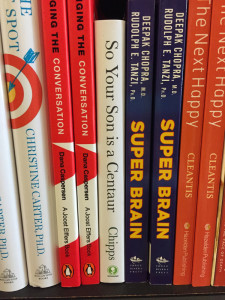
Self-help has always been a fat target for pranksters and satirists. One wily redditor carries on the tradition by creating his own glaring fakes and sneaking them into bookstores alongside the “legitimate” titles. Have a look! Is there really much of a difference?

So far, the top comment reads, “Joke’s on you. You have people interested in these books that want to buy them.”


Molla Nisreddin: A Classic of Iranian Satire

Yes, you read that correctly.


“When Satire Conquered Iran”
Adapted by the Editors from Slavs and Tatars Presents: Molla Nasreddin: The Magazine That Would”ve Could”ve Should”ve
New York Review of Books Blog
September 18. 2012

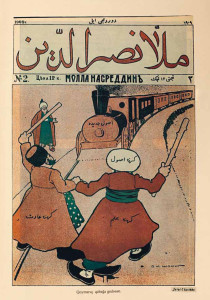
MOLLA-move-forward-nocapPublished between 1906 and 1930, Molla Nasreddin was a satirical Azeri magazine edited by the writer Jalil Mammadguluzadeh (1866-1932), and named after Nasreddin, the legendary Sufi wise man-cum-fool of the Middle Ages. With an acerbic sense of humor and realist illustrations reminiscent of a Caucasian Honoré Daumier or Toulouse-Lautrec, Molla Nasreddin attacked the hypocrisy of the Muslim clergy, the colonial policies of the US and European nations towards the rest of the world, and the venal corruption of the local elite, while arguing repeatedly for Westernization, educational reform, and equal rights for women. Publishing such stridently anti-clerical material, in a Muslim country, in the early twentieth century, was done at no small risk to the editorial team. Members of MN were often harassed, their offices attacked, and on more than one occasion, Mammadguluzadeh had to escape from protesters incensed by the contents of the magazine. Continue reading “Molla Nisreddin: A Classic of Iranian Satire”

Looking Back at Some Superstar Scambaiters

419 scams (a/k/a “NIGERIAN PRINCE” emails) have long, long fascinated certain quarters of the internet. They’ve flooded inboxes with outsider poetry and inspired satire and scambaiting, a prankish and dangerous literary subgenre explored at length in the fascinating work of journalist Eve Edelson.

Craigslist killers, social media “catfishing” scams, and the internet vigilantes of Anonymous now get much more attention, making 419ers look like relics, at least by internet standards. And yet, great work still emerges from the scambaiter milieu.

Here’s the absurd story (from 2013) of how a few intrepid 419-eaters orchestrated the cover of Vice, for posterity.


“How We Got the Skammerz Ishu Cover”
By Mishka Henner
Vice
December 17, 2013

Scam-baiting is a form of internet vigilantism in which the vigilante poses as a potential victim to expose a scammer. It”s essentially grassroots social engineering conducted as civic duty or even amusement, a cross-cultural double bluff in which participants on separate continents try to outdo each other in an online tug-of-war for one”s time and resources – and the other”s private banking information.

The baiter begins by “biting the hook” – answering an email from the scammer. The “victim” feigns receptivity to the financial lure, engaging the scammer in a drawn-out chain of emails. The most important element of baiting is to waste as much of the scammer”s time as possible – when a scammer is preoccupied, it prevents him from conning genuine victims.

Vice Skammerz IshuThe cover of the issue you”re looking at is a trophy from the most elaborate bait I”ve ever been involved in. Three scammers, spread across Libya and the United Arab Emirates, set the con. They posed as a widow named Nourhan Abdul Aziz, a doctor named Dr. Ahmadiyya Ibrahim and a banker going by Ephraim Adamoah. From Nourhan”s initial contact with my associate, Condo Rice, to Ephraim”s actually donning an Obama mask and shooting our cover for us, 7,000 words were exchanged over nearly four months of emails. During that time, Condo and I negotiated our way through a labyrinthine network of fake websites, bogus documents and broken English, and ended up with the weirdest photograph I”ve seen in a long time. Read the actual email correspondence here.