Step 1: Crack a Raw Egg Open into a Glass; Step 2: Hatch a Chick?

Thanks Andrea Marini (director of Art of the Prank, the movie) for this tip.


“Did Japanese students really hatch a chick outside a shell?”
by Robert Ferris
CNBC Science
June 8, 2016
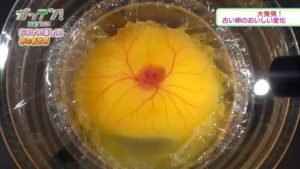
103700352-maxresdefault.530x298A video making the rounds on the internet depicts a group of Japanese students cracking an egg, dropping it into a plastic pouch, and incubating it until a baby chick emerges several days later.

The video has received about 50 million views on Facebook, and other versions have popped up on YouTube and other platforms.

A video making the rounds on the internet depicts a group of Japanese students cracking an egg, dropping it into a plastic pouch, and incubating it until a baby chick emerges several days later.

The video has received about 50 million views on Facebook, and other versions have popped up on YouTube and other platforms.

Though questions remain surrounding the video’s authenticity, the process is possible, according to E. David Peebles, a professor of poultry science at Mississippi State University. In fact, this is not the first time such a thing has been attempted.

“I remember seeing a similar kind of thing when I was in a lab North Carolina State University,” Peebles told CNBC in an interview. “They had relatively limited success with it, but they did have some success.” Read more here and watch the video below.
Roaches: A Race Above

From Larry C.: Brings to mind Joey Skaggs’ Metamorphosis: Cockroach Cure hoax.


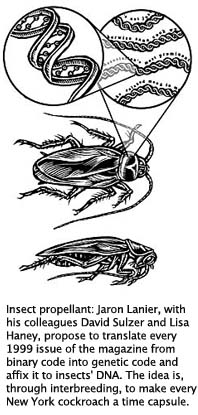
Communicating with the future: a cockroach DNA archive of the New York Times
by M. Scott Brauer
dvafoto.com
Oct 30, 2009

One of my favorite things to think about is the difficulty of communicating with humans generations from now, or even tens of thousands of years from now. An example: The Office of Civilian Radioactive Waste Management overseeing Yucca Mountain, the proposed Nevada site for disposal of nuclear waste, has been working with artists to develop a warning system that would alert future visitors to the area of the dangers buried in the mountain. From the website, “The monumental challenge is to address how warnings can be coherently conveyed for thousands of years into the future when human society and languages could change radically.” The purpose of the warning sign is “to deter intentional or inadvertent human intrusion or interference at the site and to effectively communicate over the course of the next 10,000 years that the integrity of the site must not be compromised in any way in order to prevent the release of the radiation contained within.” It”s an interesting visual challenge that must not rely on our own cultural biases. Here”s one artist”s response to the challenge, though perhaps it”s too reliant on the 20th century “Radioactive Danger” symbol. Continue reading “Roaches: A Race Above”

While You Were Sleeping The World Has Changed

The Independent UK brings news today heralding scientific advances of unimaginable significance:


Mypopic viewpoint

Car technology breakthrough hailed as vehicles driven by near-sighted persons are fitted with prescription glass windscreens. Watch the video here.


Licking history

The Sun has today made newspaper history with the world’s first flavoured page. On page 17 a white square carries the words “Lick here” and an arrow advises viewers where to place their tongues to experience the flavour… Sadly, it doesn’t work online


There’s no place like home-page

Google has officially changed its name to Topeka. The news follows last month’s decision by the mayor of Topeka in Kansas to change the city’s name to Google.


Etre, ou ne pas àªtre, c’est là  la question

The Today Programme on BBC Radio 4 reported this morning that archaeologists from Birmingham University have uncovered evidence to suggest that Shakespeare’s mother was French.


And, that’s not all… To see the rest, visit here.