
In 1981, Don Joyce launched Over the Edge, a weekly program on KPFA in Berkeley comprised of cut-up tapes and surrealist social commentary. By the time he passed in 2015, he had been a core member of the legendary avant-garde rock band Negativland, engaged in numerous high-profile intellectual property controversies (including tangles with Pepsi and U2), helped popularize the plunderphonics movement (which intersected with hip-hop and helped define internet culture), and coined the phrase “culture jamming.”
A new documentary takes a thoughtful and haunting look at this bold, brilliant, and stubborn creative force.
An Affectionate and Honest Filmic Portrait of Negativland’s Don Joyce
By Paul Riismandel
Radio Survivor
April 8, 2018
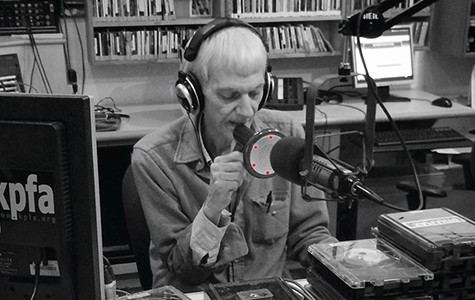
Musician, DJ and radio artist Don Joyce passed away nearly three years ago, on July 22, 2015. He left behind a voluminous archive of his KPFA radio program “Over the Edge,” which took off in new, chaotic and creative directions when he welcomed the participation of the experimental band Negativland in 1981, then joining the group.
The documentary “How Radio Isn’t Done

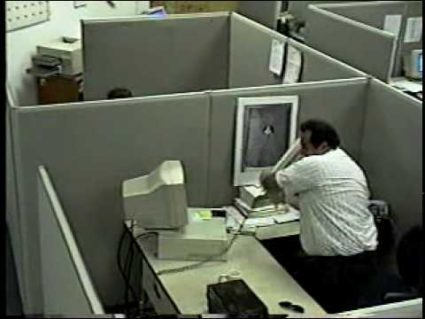 You’ve seen the video. Everyone on the internet has. A man sits in a cubicle and pounds his keyboard in frustration. A few seconds later, the Angry Man picks up the keyboard and swings it like a baseball bat at his screen””it”s an old PC from the ’90s, with a big CRT monitor””whacking it off the desk. A frightened coworker”s head pops up over the cubicle wall, just in time to watch the Angry Man get up and kick the monitor across the floor. Cut to black.
 Boeing”s aircraft manufacturing facilities were critical to the World War II efforts of Allied forces. But the unexpected attack on Pearl Harbor stoked fears of potential aerial assaults by Japanese forces. Some factories put up camouflage netting to disguise structures, but the U.S. Army Corps of Engineers took things a big step further on top of the Boeing Plant 2 in Seattle, crafting an entire faux neighborhood.

 Anyone can be anybody from the other side of a screen: a Nigerian prince pleading for money; a lonely housewife “catfishing” a romantic interest; or a 14-year-old girl posing as just about anyone. From the “bonsai kitten” scandal of 2000 to the Lonelygirl15 “vlogs,” the internet has proved itself to be fertile ground for hoax-makers, scam artists, and digital charlatans.
 A search warrant might seem excessive for library book hoarding””but Halliwell and Orton were no ordinary library pilferers. For over two years, Orton and Halliwell had been smuggling books out of their local libraries, the magnificent Art Nouveau Islington Central Library on London”s Holloway Road and nearby red-brick Essex Road Library””and then returning them.