
A new video game brings your republic-wrecking fantasies to life.
If you were for some reason dying to play a video game about fake news, it’s here now
by Marissa Wenzke
Mashable
March 27, 2017
This fake news simulator is the depressing video game America deserves

It’s something that’s come to be reviled, the very thing that may have cost America a presidential election “” fake news.
And the horrible phenomenon that’s been called out by everyone from former President Barack Obama to Apple CEO Tim Cook now has a video game all about it.
Yes, you can actually climb inside the minds of real-life humans who distribute lies for money. Fake It to Make It describes itself as “a social impact game about fake news.”
By that definition, it’s less a celebration of fake news and more a socially conscious dissection of it. Well, that’s at least what it’s intended to be, as its creator Amanda Warner explains.
“I think that better understanding how and why we are manipulated by others, for profit or power, is worthwhile knowledge to have,” she told The Verge.
The game takes you through a journey that mirrors the stories of real-life fake news creators. For instance, it starts by asking you to choose a purchase you want to make, like a $1,000 used car or $400 for a deposit on an apartment (deals we think questionably exist IRL). Read more.
 On Friday, as part of its regular “1600 Daily” email briefing, The White House included a roundup of links of news friendly to President Donald Trump”s administration, as it regularly does.
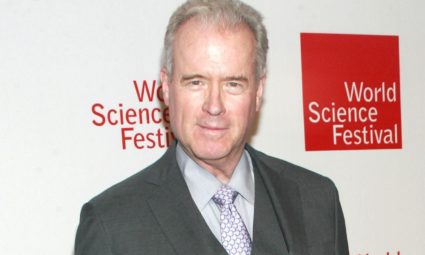 Robert Mercer very rarely speaks in public and never to journalists, so to gauge his beliefs you have to look at where he channels his money: a series of yachts, all called Sea Owl; a $2.9m model train set; climate change denial (he funds a climate change denial thinktank, the Heartland Institute); and what is maybe the ultimate rich man”s plaything – the disruption of the mainstream media. In this he is helped by his close associate Steve Bannon, Trump”s campaign manager and now chief strategist. The money he gives to the Media Research Center, with its mission of correcting “liberal bias” is just one of his media plays. There are other bigger, and even more deliberate strategies, and shining brightly, the star at the centre of the Mercer media galaxy, is Breitbart.
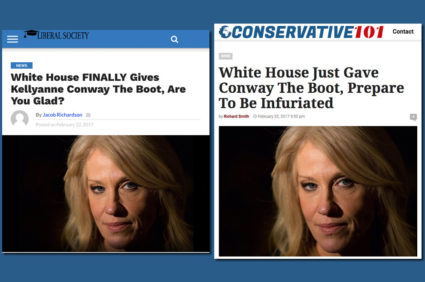 The websites Liberal Society and Conservative 101 appear to be total opposites. The former publishes headlines such as “WOW, Sanders Just Brutally EVISCERATED Trump On Live TV. Trump Is Fuming.” Its conservative counterpart has stories like “Nancy Pelosi Just Had Mental Breakdown On Stage And Made Craziest Statement Of Her Career.”