
A scambaiting expedition leads to an unexpected conclusion:
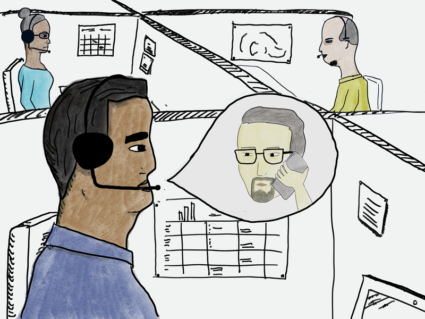
“I trolled my IRS scammers for weeks. I learned something really dark.”
by Alex Chang
Vox
October 18, 2016
These scammers had called me so many times that I knew their script.
They always introduced themselves as IRS officers with inconspicuous American names, like “Paul Thomas.” They called to collect the $6,000 I owed the IRS. And if I didn’t pay, they threatened to send the local police to arrest me.
They were unconvincing. I didn’t understand how this scam could work on anyone. But a quick search led me to a couple in Tennessee, a student in Virginia, and thousands of others who’d fallen for the scam. There was something about this scam that worked “” and I had to find out what it was.
So I got further and further into the scam. At first, I played along for a few minutes and then hung up. After a few days, I trolled them with the vast amount I learned about their operation. Then, on a hot mid-September day, I decided enough was enough.
I was going to get to the end of this scam.
That’s how I ended up talking to “Steve Smith” for 30 minutes. He was a senior investigations officer “” the actual person who walks you through how to send them money. I learned that his secret is maintaining an aura of authority. That’s how he optimizes fear. That’s how he gets people to suspend logic, drive to Walgreens, and buy iTunes gift cards to pay the IRS. The scam takes advantage of the most vulnerable people. Read more.
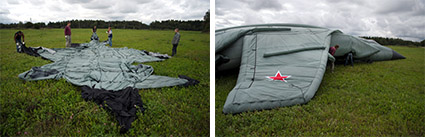 Deep in the Russian countryside, the grass sways in a late-summer breeze. In the distance, the sun glistens off the golden spires of a village church. It is, to all appearances, a typically Russian scene of imperturbable rural tranquillity.
 Only a rube or possibly an alien would pick up an unknown phone call, hear the question “Is your refrigerator running?” and answer in the affirmative. And so only the luckiest of amateur mischief-makers would get the satisfaction of getting to drop the “Well, you better go catch it!” before cackling away into the sunset.
 It made the front page of Bild, Europe”s largest daily newspaper, just beneath their update about the Germanwings crash. From there, it ricocheted around the internet and beyond, making news in more than 20 countries and half a dozen languages. It was discussed on television news shows. It appeared in glossy print, most recently in the June issue of Shape magazine (“Why You Must Eat Chocolate Daily,” page 128). Not only does chocolate accelerate weight loss, the study found, but it leads to healthier cholesterol levels and overall increased well-being. The Bild story quotes the study”s lead author, Johannes Bohannon, Ph.D., research director of the Institute of Diet and Health: “The best part is you can buy chocolate everywhere.”