Too Hot to Handle?

Challenging the status quo.


33 Banned Artworks Deemed Too Controversial for Public Exhibition, by Jaycee Gudoy, Go2Tutors, July 14, 2026.

Art has always made people uncomfortable. That’s not an accident — it’s frequently the point.
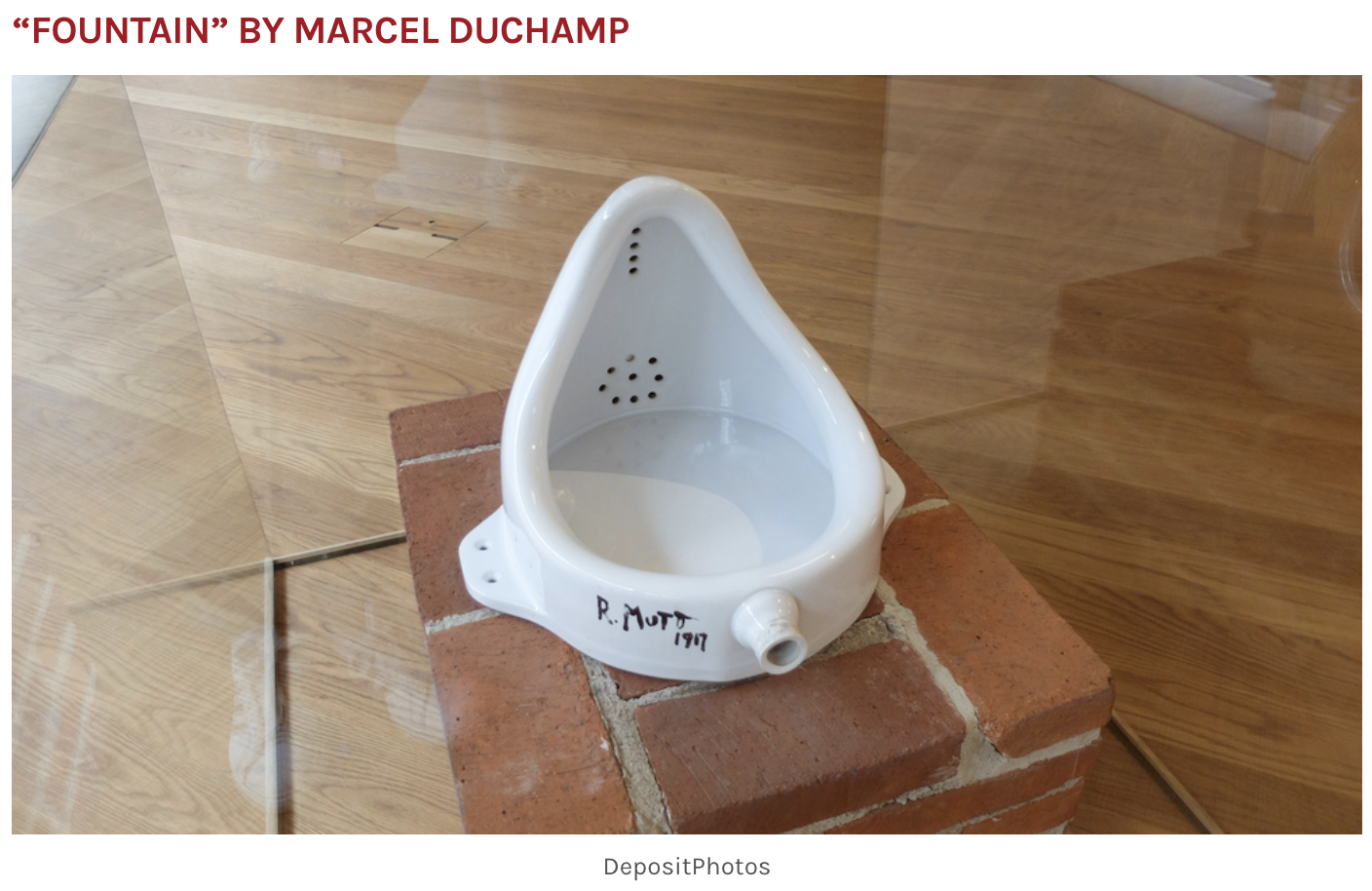
But there’s a difference between art that challenges and art that societies, governments, galleries, and institutions have decided crosses a line so completely that the public simply isn’t allowed to see it. Censored, seized, locked in storage, refused at the border, yanked from museum walls mid-exhibition: the works collected here have all been banned, suppressed, or blocked from public view at some point in history — and often for reasons that reveal far more about the censors than about the art itself.

Some of these decisions were later reversed. Many weren’t. Read the whole article here.
Prank Artists or ___ Artists? You Decide

A production budget between $2.5 million and $5 million changes the dynamic from a Yes Men corporate prank to something entirely different.

Here are two articles, one day apart, about Northland Tales, an unscripted prank comedy series, produced by the Yes Men’s Igor Ramos (and others) and financed through CBC, the Aboriginal Peoples Television Network, and the Indigenous Screen Office. The show purported to use pranks for “social action” to address “historical injustices.”

When two interviewees, Frances Widdowson and Lindsay Shepherd, separately expressed concerns about the truthfulness of their interviewers, CBC paused production. Frances Widdowson, sensing something was “off” during her interview, live streamed it to social media (see below).


Article #1:
CBC pausing production on satirical Indigenous show, by Mark Gollom, CBC News, May 20, 2026.

Article #2:
The CBC’s Northland Tales scandal isn’t about bad taste—it’s about what happens when public money funds deception, by The Hub, May 21, 2026.

Frances Widdowson’s live stream in the middle of her interview with “Mike Smith” (aka Igor Vamos of the Yes Men):

Joey Skaggs’ First Easter Sunday Crucifixion Event Turns 60!

60 years ago, in 1966 on Easter Sunday, Joey Skaggs dragged his iconoclastic sculpture of a naked and decayed figure of Jesus Christ on a crucifix into Tompkins Square Park on the lower east side. It was his personal statement about the war in Vietnam and the hypocrisy of religion.

This was the beginning of Skaggs’ career as an artist who used the streets as his theater.

Gothamist covers Joey Skaggs’ 41st Annual April Fools’ Day Parade

New York City’s greatest pranks, from fantastical parades to a phony Mets star, by Samantha Max, Gothamist, April 1, 2026

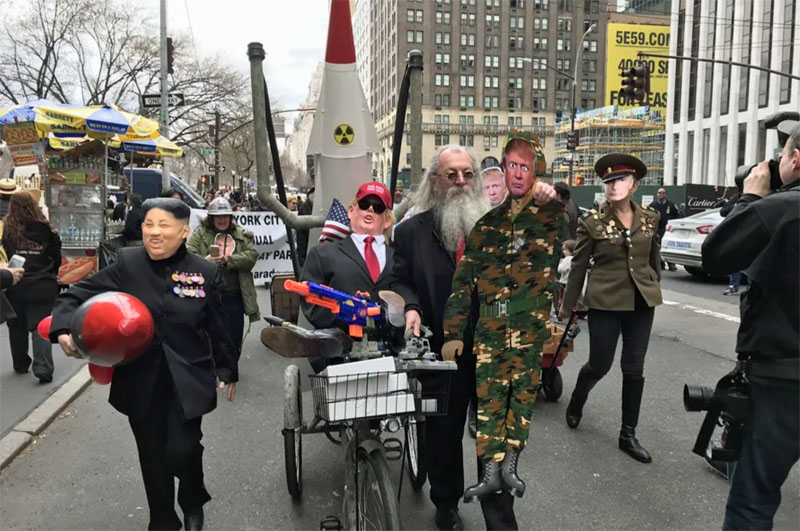
Trump’s Military Parade at the 33rd Annual April Fools’ Day Parade

Artist and activist Joey Skaggs has been inviting members of the New York City media to his annual April Fools’ Day parade along Fifth Avenue since 1986.

Press releases archived on Skaggs’ website describe the event as an attempt to “bring people back in touch with their inherent foolishness” and celebrate “the public’s right to laugh in the face of authority.” Past parades have included a President Donald Trump look-alike contest and a Y2K-themed end-of-the-world party. This year’s press release invites participants to ponder “what’s real and what’s not” at a parade led by the president himself, followed by a screening of the “Melania mockumentary” and a reading of all redacted names in the Jeffrey Epstein files, other than victims.

Read the rest of the article here.

Joey Skaggs’ Cathouse for Dogs Turns 50!

50 years ago on April 1, 1976, in response to a subpoena issued by the New York State Attorney General, Joey Skaggs revealed that his Cathouse for Dogs (doggy bordello) was a satirical media performance hoax.