The times they are a’changin’?

This New York Times article by Alex Williams about the history and psychology of the heckler from Shakespeare’s time to the present was sent in by Scott Pellegrino. Both artists and their critics are grappling with First Amendment freedom of speech issues… and bad manners.


Rise of the Takedown
by Alex Williams
The New York Times
April 8, 2007

To Alicia Estrada, a professor of Central American studies who was ejected from a screening of Mel Gibson”s “Apocalypto” last month after grilling him about the historical accuracy of that Maya epic, which he directed, she was not a “heckler,” as Mr. Gibson”s representatives called her, but a dutiful academic asking of him what she asks of students in her classroom.
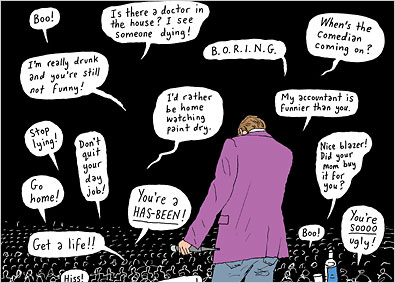
08heck3951.jpgTo Kyle Doss, an audience member who helped spark Michael Richards”s tirade at a Los Angeles comedy club last November by yelling “You”re not funny” following a racially charged joke, he was not a heckler, but a champion of tolerance. “I think freedom of speech should have some kind of limit,” Mr. Doss later told a reporter.
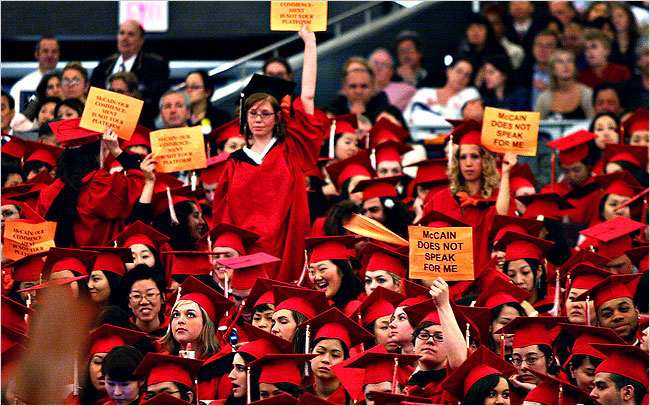
08heck6503.jpgTo Jean Sara Rohe, one of the students who assailed Senator John McCain about Iraq at his commencement address at the New School last May, she was not a heckler, as newspapers later called her, but a crusader for peace, doing what her “conscience called for.”

For decades, hecklers who railed at entertainers, politicians and athletes were confined to the margins “” Continue reading “The times they are a’changin’?”
Hey, kids! Madison Avenue wants you!

Troy Jollimore reviews the book “Consumed: How Markets Corrupt Children, Infantilize Adults, and Swallow Citizens Whole”, by Benjamin R. Barber, Norton, 2007, in the San Francisco Chronicle, April 1, 2007 and writes about “the transformation of Homo sapiens into Homo consumerus” by way of the “consumerization of the child” and infantilization in general by marketers who, using culture jamming and other techniques, have created a population of consumers who are “a ready and pliable modeling clay for the marketers’ sculpting techniques”.

Troy Jollimore is an External Faculty Fellow at the Stanford Humanities Center. His poetry collection, “Tom Thomson in Purgatory,” won a 2007 National Book Critics Circle Award.

“Consumed: How Markets Corrupt Children, Infantilize Adults, and Swallow Citizens Whole”, by Benjamin R. Barber, is available at Amazon.com via this link. -JS
UPDATE, May 13, 2007: At the end of this article, check out the Benjamin R. Barber interview with Stephen Colbert on the Colbert Report, Comedy Central.


When the movie “Smokin’ Aces” opened in late January, the first paragraph of the review by New York Times film critic A.O. Scott — which, Scott went on to claim, constituted a “fair summary” of the movie — read as follows:

“‘F.B.I.! F.B.I.!’ Blam blam blam blam. ‘[Expletive]. [Expletive].’ Blam blam blam. Spurt of blood. Plot twist. ‘F.B.I.! F.B.I.!’ ‘[Expletive].’ Blam blam blam blam blam. ‘[Expletive].’ ‘F.B.I.!’ ‘Hotel Security!’ Blam. Exploding skull. Guy sits on a chain saw. Montage. [Expletive]. Plot twist. Roll credits.”

Undaunted — indeed, apparently delighted — the studio quoted from the paragraph in their ads. Predictably enough, millions of American moviegoers turned out to see it. Continue reading “Hey, kids! Madison Avenue wants you!”

The Art of the Con: A notorious prankster uses hoaxes to expose the media

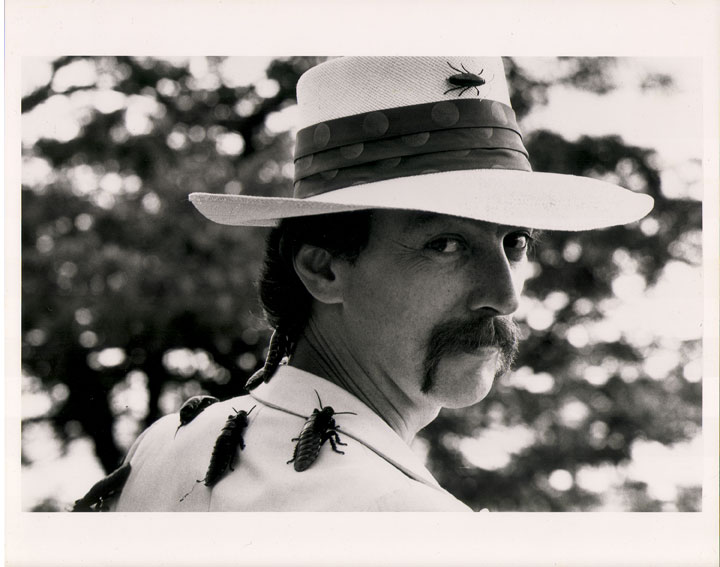
Joseph Gregor (aka Joey Skaggs) in Metamorphosis

This article was published in Extra! by FAIR (Fairness & Accuracy in Reporting) in the 1999 March/April issue. Although I’ve produced many new works since then, the basic premises described below still resonate for me. This should provide a pretty good summary of the intent of my work and why I do it. I hope it also sets a positive and creative tone for this Blog. -JS


We’re living in a time when it seems everything we see on the news is a bad joke: President Clinton and impeachment, Y2K and the end of the world, Viagra raising the dead, cloning your dead pet dog.

So how can a conscientious media prankster make a mark? When reality gets this strange, pranks are needed more than ever to jolt us into reexamining our values.

With the Internet’s immediacy, its availability to anyone wishing to plant an idea, service or product for the world to consume, there’s more opportunity than ever for both pranks and scams. Anyone can send an e-mail, create a rumor on Usenet, make a website and look official with very little effort or cost.

To me the prank is fine art. Continue reading “The Art of the Con: A notorious prankster uses hoaxes to expose the media”

Pranks Defined

books_cov_prank.jpg

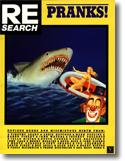
This definition of pranks is from V.Vale’s introduction to his formative book PRANKS, published in 1987 by RE/Search Publications. I’ve always loved this essay. He has graciously allowed us to reprint it here. In 2006, RE/Search Publications released a follow-up book called Pranks! 2 that is equally seminal in its approach to the subject -JS


PRANKS. According to the Merriam-Webster New Collegiate Dictionary, a prank is a “trick . . . a mildly mischievous act . . . a practical joke . . . a ludicrous act.” The best pranks invoke the imagination, poetic imagery, the unexpected and a deep level of irony or social criticism””such as Boyd Rice’s presentation of a skinned sheep’s head on a silver platter to Betty Ford, First Lady of the United States. Great pranks create synaesthetic experiences which are unmistakably exciting, original, and reverberating, as well as creative, metaphoric, poetic and artistic. If these criteria be deemed sufficient, then pranks can be considered as constituting an art form and genre in themselves.

However slighted by Academia, pranks are not without cultural and historical precedent. Continue reading “Pranks Defined”