The Short Life of the Astoria Scum River Bridge

Submitted by W.J. Elvin III as seen on Posterchild’s Blade Diary and Jason Epping’s flickr page:


Astoria Scum River Bridge:

For several years, a leaky pipe on 33rd Street beneath the Hell Gate Bridge viaduct approach has submerged more than a hundred square feet of heavily-trafficked sidewalk under a festering cesspool of standing water. Astoria Scum River, as it’s called, stretches the entire width of the sidewalk, and as winter approaches, the river ices over and becomes particularly hazardous to cross.

Astoria Scum River Bridge was constructed to offer Astorians an opportunity to safetly cross this hazard. The unauthorized bridge is a gift to the pedestrians of Astoria in the absence of successful municipal efforts to ameliorate the problem.

Continue reading “The Short Life of the Astoria Scum River Bridge”

Freedom of the Press vs. The Truth

Submitted by W.J. Elvin III: British Journalism 101: Don’t let facts stand in the way of a good story…


British Newspapers Make Things Up
by Satoshi Kanazawa
Psychology Today
January 24, 2010

In April 2008, I wrote that British journalists interpret “freedom of the press” to mean that they can make up anything they want and publish it as fact in British newspapers. Now another evolutionary psychologist has learned the lesson the hard way.

In the earlier post, I explain that, by the American standards, all British newspapers are tabloids because they don”t distinguish between what is true and what they make up. I knew this from my own experiences of dealing with British journalists, but, as it turns out, even the British government admits, in an official government publication, that British newspapers make things up and report them as facts.

Most British people consider the Times of London to be the most respectable “broadsheet” newspaper (as opposed to “tabloid” newspapers) in the UK, despite the fact that the Times, along with most British “broadsheet” newspapers, is now published in the tabloid size to make it easier for people to read it in crowded London subways. Last week, the Sunday Times published an article with the headline “Blonde women born to be warrior princesses.” The article reported that “Researchers claim that blondes are more likely to display a “warlike” streak because they attract more attention than other women and are used to getting their own way – the so-called “princess effect.”” The Times article quotes the evolutionary psychologist at the University of California – Santa Barbara, Aaron Sell, and his findings are purportedly published in his article in the Proceedings of the National Academy of Sciences, written with the two Deans of Modern Evolutionary Psychology, Leda Cosmides and John Tooby.

As it turns out, however, none of this is true, as Sell explains in his angry letter to the Times. He and his coauthors do not mention blondes at all in their paper and they don”t even have hair color in their data. The supplementary analyses that Sell performed after the publication of the paper, as a personal favor to the Times reporter, show the exact opposite of what the Times article claims. After he presumably listened to Sell explain all of this on the phone, the Times reporter nonetheless made up the whole thing, and attributed it to Sell. Continue reading “Freedom of the Press vs. The Truth”

LiteratEye #48: Newspaper Nostalgia: Biped Beavers, Libidinous Man-Bats on the Moon

Here’s the forty-eighth installment of LiteratEye, a series found only on The Art of the Prank Blog, by W.J. Elvin III, editor and publisher of FIONA: Mysteries & Curiosities of Literary Fraud & Folly and the LitFraud blog.


LiteratEye #48: Newspaper Nostalgia: Biped Beavers, Libidinous Man-Bats on the Moon
By W.J. Elvin III
January 22, 2010

beavers-200The New York Times, you may have noticed, plans to start charging for portions of its web content. One assumes the portions will be the those readers find most interesting.
So then patronage will fall off, and with fewer readers there will be fewer advertisers, and so on until we hear the death rattle of yet another newspaper. Well, in the case of the Times it probably won’t be quite that bad, but the Internet era has certainly seen the downsizing or demise of quite a few news publications.

How bad is it? MSN Money lists newspaper subscriptions among its top ten things not to buy in 2010, citing the popular alternatives.

Which is too bad, because newspapers and news magazines have been a great vehicle for the perpetuation of hoaxes. No doubt our host, Joey Skaggs, is indebted to more than a few for taking the bait. In my own forty years or so in the news business I noticed a fairly cavalier attitude toward great stories that seemed at least a little fishy: “Print first, ask questions later.”

In the good old days, before newspapers got all goody-goody ethical, editors and reporters were among the top pranksters.

The sport got up its steam back in the 1830s. That was when Richard Adams Locke, an English journalist serving as editor of The New York Sun, sprang what is regarded as the greatest newspaper hoax of all time. Continue reading “LiteratEye #48: Newspaper Nostalgia: Biped Beavers, Libidinous Man-Bats on the Moon”

LiteratEye #47: A Tale of Theft & Murder Behind “The Hound of the Baskervilles”

Here’s the forty-seventh installment of LiteratEye, a series found only on The Art of the Prank Blog, by W.J. Elvin III, editor and publisher of FIONA: Mysteries & Curiosities of Literary Fraud & Folly and the LitFraud blog.


LiteratEye #47: A Tale of Theft & Murder Behind “The Hound of the Baskervilles”
By W.J. Elvin III
January 15, 2010

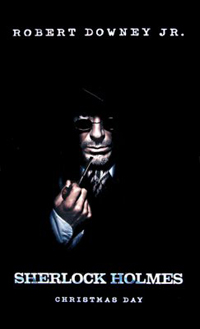
Sherlock Holmes Movie Poster-200Some reviewers say Sir Arthur Conan Doyle must be rolling over in his grave in response to the new Sherlock Holmes film. Typical is the comment in The New York Times that Robert Downey, Jr.’s version of Sherlock “frequently bears little resemblance to the one Conan Doyle wrote about.”

Well, there are a great many Sherlock Holmes stories that Conan Doyle had nothing to do with other than to provide the basics, and who knows how many actors from the big screen to the small theater have portrayed our hero, each in their own way. So the current situation is nothing new, Sir Arthur has already been given plenty of reason to roll over.

More to the point, who can say how Doyle might have reacted? His famous detective novels give the impression he was as much a man of science as Sherlock, pragmatic, principled, scoffing at fantasy. Not entirely so. He was into fairies, séances and, it has been charged, murder.

Doyle continues to suffer ridicule for falling for fake photos of fairies. It’s said that in the 1920s he spent a million dollars in an effort to prove the existence of the tiny folk.

Probably the strangest story involving Doyle found him accused of plagiarism, conspiracy and murder. Continue reading “LiteratEye #47: A Tale of Theft & Murder Behind “The Hound of the Baskervilles””

Get a Whiff of This: Spec “Suicide” Audi Ad

Submitted by W.J. Elvin III about an unauthorized spec commercial for Audi A5:


Suicide: still not the best advertising theme from AdFreak.com, by Brian Morrissey, January 8, 2010

audisuicidead-200Oh goody, another suicide ad. What is it about cars that leads people to the suicide theme? You’ll recall that Volkswagen disowned a rogue suicide-bomber spec commercial four years ago. General Motors had no such choice after airing its disastrous suicidal-robot spot in the 2007 Super Bowl. Now comes a presumably unauthorized (or at least deniable) Audi spot showing a man in a parking garage trying to kill himself by attaching a hose to his tailpipe. Wouldn’t you know it, to his profound dismay, the diesel-powered Audi won’t produce enough toxic exhaust to do the job. Bummer. The on-screen copy reads, “Clean diesel technology. Good for the environment. Good for you.” We’re left with a cheery shot of the man closing the car window on his neck. My question: Has the suicide motif ever been used successfully in a commercial? It just seems like a bad direction to go in when you’re looking to check the “edgy” box.

http://adland.tv/sites/default/modules/swftools/shared/flash_media_player/player.swf

Related links:

  • Audi denies link to internet suicide ad
  • A “real” suicide car ad from Citroen, directed by Brian Baderman.
  • Controversial “Polo, Small But Tough” VW suicide bomber ad