LiteratEye #38: New ‘Literary Hoaxes’ Book Leaves the Curious Reader in the Dark

Here’s the thirty eighth installment of LiteratEye, a series found only on The Art of the Prank Blog, by W.J. Elvin III, editor and publisher of FIONA: Mysteries & Curiosities of Literary Fraud & Folly and the LitFraud blog.


LiteratEye #38: New ‘Literary Hoaxes’ Book Leaves the Curious Reader in the Dark
By W.J. Elvin III
November 6, 2009

There are a great many mysteries in the field of literary deception.
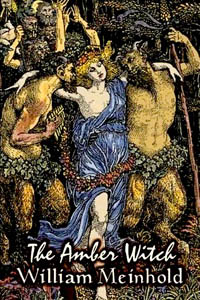
amberwitch-200So it is always a pleasure to learn of a new book that may shed light.

Having seen advance reviews some time ago in the British Press, I eagerly awaited the arrival of Melissa Katsoulis’ Literary Hoaxes.

Well, it’s a grand overview, a nice line-up of the usual suspects, but I’m less than delighted. Hoaxes raises many more questions than it answers, most of the questions resulting from a failure to source the tales therein.

How is it Katsoulis knows so much about William Henry Ireland, the young Shakespeare forger of the late 1700s?

Who told Katsoulis that the American Indian imposter Grey Owl was once recognized through his feathers by his very British aunts, who decided to keep their observation a secret?

And what assurance do we have that the author has her facts straight regarding Pierre Plantard’s part in creating the hoax behind Dan Brown’s Da Vinci Code?

And so on, and on.

The book has no citations, no bibliography. No index, though the table of contents serves the purpose in a basic way. There just aren’t many signposts to guide those who might want to know more about any given topic. Continue reading “LiteratEye #38: New ‘Literary Hoaxes’ Book Leaves the Curious Reader in the Dark”
LiteratEye #36- Memo to New Age Native American Wannabes: Maybe It”s Time for a Brain Dance

Here’s the thirty sixth installment of LiteratEye, a series found only on The Art of the Prank Blog, by W.J. Elvin III, editor and publisher of FIONA: Mysteries & Curiosities of Literary Fraud & Folly and the LitFraud blog.


LiteratEye #36- Memo to New Age Native American Wannabes: Maybe It”s Time for a Brain Dance
By W.J. Elvin III
October 23, 2009

LL009-200Who wouldn”t want to pop $9,695 for the opportunity to starve for a couple of days and then sit in a steamy, almost unbearably hot box for hours and hours with 50 or so other eager seekers hoping to obtain the secret to enormous wealth?

Mighty compelling. But unfortunately it recently meant death for three participants and dire illness for 18 others. The verdict isn”t in as to the exact cause but apparently the tragedy resulted from burns, dehydration, respiratory arrest and elevated body temperature.

The seekers were participating in a “sweat lodge” ritual under the direction of James Arthur Ray, author of Practical Spirituality: How to Use Spiritual Power to Create Tangible Results, and many other similar books.

The charismatic Ray, like many others who might be termed New Age gurus, bases his promises of wealth, healing and/or special powers on a concoction distilled from the mystical beliefs of many cultures. The sweat lodge, at least this particular version, is borrowed from a Native American cleansing ritual.

These New Age gurus are messing with practices that the – what, “Old Age” – cultures have maybe thousands of years experience in administering. Many of the groups that hold the rituals sacred not only resent the “theft of culture” but for many years now have been warning of horrific dangers awaiting novice practitioners. Continue reading “LiteratEye #36- Memo to New Age Native American Wannabes: Maybe It”s Time for a Brain Dance”

LiteratEye #35: Ghost Story: The Riddle of Who Wrote What

Here’s the thirty fifth installment of LiteratEye, a series found only on The Art of the Prank Blog, by W.J. Elvin III, editor and publisher of FIONA: Mysteries & Curiosities of Literary Fraud & Folly and the LitFraud blog.


LiteratEye #35: Ghost Story: The Riddle of Who Wrote What
By W.J. Elvin III
October 16, 2009

seance-200It may come as a surprise to some that Sean Connery, in his recent book, Being A Scot, provides a truly enlightening cultural history lesson.

The book, issued by Phoenix Illustrated and as yet available only as an expensive import here in the States, surveys Scottish creativity, inventiveness and history. And, since it”s autobiographical in its own quirky way, there”s the necessarily egocentric focus on Connery.

Of particular interest to armchair detectives of the LiteratEye squad is the invitation to help solve a literary mystery.

Connery presents a gloom-and-doom quote, written two hundred years ago but obviously appropriate in the present day. Sorry if it”s a bit windy and profound, it”s Sir Sean”s puzzle, not mine:

“A democracy is always temporary, and therefore cannot exist as a permanent form of government. It will only exist until the voters discover that they can reward themselves with the public treasury. From that moment on, the majority always votes for the candidates promising the most benefits from the public treasury. A democracy therefore always collapses over loose fiscal policy, which is always followed by a great dictatorship. The average age of the world”s greatest civilizations has been 200 years.”

Connery says the quote traces to the voluminous works of a fellow Scot, the historian Alexander Fraser Tytler. It was given new life in a speech by President Ronald Reagan (who, ironically, sparked massive raids on the public treasury to compensate for the economic crimes and disasters resulting from his deregulation debacles).

What Connery wants to know is just where in Tytler”s work does the quote appear? A search of Tytler archives in the U.S. and Scotland failed to turn up the exact source. Continue reading “LiteratEye #35: Ghost Story: The Riddle of Who Wrote What”

LiteratEye #34: Between the Covers: What”s It Like to Be in a Book?

Here’s the thirty fourth installment of LiteratEye, a series found only on The Art of the Prank Blog, by W.J. Elvin III, editor and publisher of FIONA: Mysteries & Curiosities of Literary Fraud & Folly and the LitFraud blog.


LiteratEye #34: Between the Covers: What”s It Like to Be in a Book?
By W.J. Elvin III
October 9, 2009

FOUR-190Once upon a time it was something of a rarity to appear personally in print, or even to know someone who”d been written about.

Today, it”s routine to be mentioned in someone”s blog, or, failing that, to spend five minutes launching a blog and filling it with “me, me, me.”

But it”s still a bit extraordinary to be in a book unless one has achieved celebrity or notoriety. When it happens to ordinary folk, the experience may come as a welcome surprise or a humiliating shock.

Certainly a book could be written covering all the lawsuits that have resulted from unwelcome attention of that sort.https://artoftheprank.com/blog/wp-admin/index.php?page=stats

For me, a career in the news business has meant frequently writing about others and rarely being written about myself.

I was, for many years, a Washington “insider” columnist and feature writer.

I”ve often run across books mentioning intrigues, scandals and skullduggery that I”d unearthed or expanded upon.

But that”s not the same as actually being named and perhaps profiled. Continue reading “LiteratEye #34: Between the Covers: What”s It Like to Be in a Book?”

LiteratEye #32: Pranks With a Novel Twist — An Interview with Elusive Wu Ming

Here’s the thirty second installment of LiteratEye, a series found only on The Art of the Prank Blog, by W.J. Elvin III, editor and publisher of FIONA: Mysteries & Curiosities of Literary Fraud & Folly and the LitFraud blog.


LiteratEye #32: Pranks With a Novel Twist — An Interview with Elusive Wu Ming
By W.J. Elvin III
September 25, 2009

band0-200The counter-cultural creative arts collective Wu Ming, based in Italy, evolved out of the madcap Luther Blissett phenomenon (see LiteratEye #15).

Blissett scattered into a million little pieces, becoming an incredible world-wide prank epidemic. For a time it seemed everyone was doing bizarre creative “actions” and attributing them to Blissett.

Then some members of the group that launched the Blissett project morphed into Wu Ming.

Apparently they are now four culturally revolutionary Italian novelists cranking out very popular books.

Being anonymous – the name means “no name” in Mandarin – they are only identified by number, Wu Ming1 through Wu Ming5.

Right. And we just said there are four of them. Well, one of them must have dropped out. Or something. Continue reading “LiteratEye #32: Pranks With a Novel Twist — An Interview with Elusive Wu Ming”