Davy Rothbard of Found fame profiles a company that hires out fake crowds. H/t Dave Pell.
“Crowd Source: Inside the company that provides fake paparazzi, pretend campaign supporters, and counterfeit protesters”
by Davy Rothbard
The California Sunday Magazine
March 31, 2016

When he can, Adam trains his hired crowds himself, but more often he relies on local coordinators who manage the events. In Los Angeles, Del Brown “” the woman I met at the Marriott “” is Adam”s point person. Del moved to California in 2012 to pursue an acting career and soon landed a Doritos commercial, but after that, she mostly found work as an extra in student films and small indie projects. She worked a gig with Crowds on Demand, and Adam was so impressed he immediately put her on staff. Del has established a wide network she can reach out to when she needs, say, 60 crowd-fillers for a party on the roof deck of the W Los Angeles hotel or a 6-foot-6-inch man in a leather kilt to act as a fan at the launch of a book about S&M culture. Many of Del”s recurring crowd members are background actors she”s met on film sets, yet she is continually trawling for fresh faces.
At the Marriott, I”d met Jackie Greig, who typifies the crowd members Del and Adam often hire. Jackie is 50 years old, a film student at Los Angeles City College. A teacher had shared a posting about what she thought was an upcoming film shoot that was looking for paid help. Jackie showed up at the Marriott only to discover that this was not a film shoot. Yes, she was being asked to aim her camera at the life coaches, but whether she hit record was immaterial. On one hand, Jackie was frustrated. She”d skipped class and driven more than an hour to be there. On the other hand, after a couple of hours, she”d made $37.50 and could now afford a Foo Fighters concert for her daughter. “I just wish they”d been more transparent about what the gig really was,” Jackie tells me.
If you”re hiring a crowd to fill a campaign event or a film premiere, the last thing you want to do is let anyone know.
The tricky thing, Adam says, is how many of his clients insist on secrecy. If you”re hiring a crowd to fill a campaign event or a film premiere, the last thing you want to do is let anyone know. Adam must balance his goal of spreading awareness of his company, so he can attract more clients, with the benefits of keeping the public in the dark. If people start to doubt the veracity of crowds, his business might suffer. “Right now, we”re still kind of this secret weapon,” Adam says. “We have the element of surprise. Yeah, you might”ve heard about political candidates paying to bring some extra bodies into their campaign events, but it”s beyond the realm of most people”s imagination that crowds are being deployed in other ways. Nobody is skeptical of crowds. Of course, in five years that could change.”
Adam says he gives Del wide latitude to recruit crowd members. Most often, she presents the gigs as background acting work. This is only slightly misleading: Crowd members won”t bulk up their IMDB profile, but being part of a fake crowd is a kind of acting. In a world where everybody is constantly playing a part, staging moments to be broadcast later on social media, the line between counterfeit and authentic has become blurred. Is curating a version of yourself on Facebook any less fake than pretending to be a superfan of a life coach? Read more.
 For a few #blessed days, Lura Cafe was the hottest new restaurant in Providence. The bright, cozy farm-to-table joint hid in plain sight next to a downtown parking lot, steps away from the Rhode Island Convention Center. Lura would be a refuge for diners in the know, serving modern takes on cafe classics””all local, all organic, all certified GMO-free. It was upscale and casual, timeless and avant-garde. It had a vaguely Nordic air of refinement.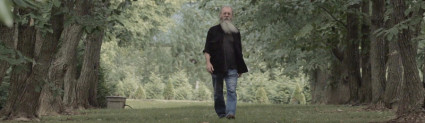
 Writing shallow
  .
.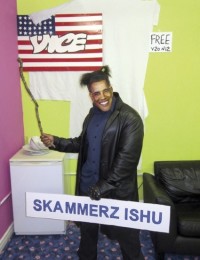 The cover of the issue you”re looking at is a trophy from the most elaborate bait I”ve ever been involved in. Three scammers, spread across Libya and the United Arab Emirates, set the con. They posed as a widow named Nourhan Abdul Aziz, a doctor named Dr. Ahmadiyya Ibrahim and a banker going by Ephraim Adamoah. From Nourhan”s initial contact with my associate, Condo Rice, to Ephraim”s actually donning an Obama mask and shooting our cover for us, 7,000 words were exchanged over nearly four months of emails. During that time, Condo and I negotiated our way through a labyrinthine network of fake websites, bogus documents and broken English, and ended up with the weirdest photograph I”ve seen in a long time.