LiteratEye #6: Tracking an Elusive Author

Here’s the sixth installment of LiteratEye, a series found only on The Art of the Prank Blog, by W.J. Elvin III, editor and publisher of FIONA: Mysteries & Curiosities of Literary Fraud & Folly and the LitFraud blog.


LiteratEye #6: Tracking an Elusive Author
By W.J. Elvin III
March 19, 2009

pastore-bookIn the last column there was a sort of drive-by mention of author Stephen R. Pastore and the possibility that some of his prominence and recognition as an author is self-imposed. That observation was inspired by a reporter”s challenge to him and some questions raised by Wikipedia editors regarding his credibility. So far, rather than coming to the fore in his own defense, Pastore seems to be fading deeper into the literary mists.

This is beginning to look like a story that The New York Times and Washington Post will be digging into soon. So of course I wanted The Art of the Prank Blog readers to be able to say they saw it here, some of it at any rate, first. Why haven”t the heavyweights weighed in already? Well, venturing a guess, Pastore hasn”t yet appeared on Oprah, and that, the way I”ve got it figured, is the trigger for national media attention these days. First you spoof Oprah, then you show up on big media radar.

Pastore is a winner of the Aldous Huxley Prize for literature. The prize may not ring bells of recognition with you, but it was listed on a site devoted to literary awards. However, that site has since disappeared. When you dig it out of the Internet archives, there is indeed mention such an award, but details have been scrubbed. Continue reading “LiteratEye #6: Tracking an Elusive Author”
LiteratEye #4: The Fix Is In: Planted Documents

Here’s the fourth installment of LiteratEye, a new series, only on The Art of the Prank Blog, by W.J. Elvin III, editor and publisher of FIONA: Mysteries & Curiosities of Literary Fraud & Folly and the LitFraud blog.


LiteratEye #4: The Fix Is In: Planted Documents
By W.J. Elvin III
March 6, 2009

Monk Transcribing ScripturesThe recent fuss about President Obama”s birth certificate started me thinking about the broader topic of “planted” documents. Three modern cases, involving murder, fraud and theft came to mind.
The first case features a brilliant fellow, for a time a highly respected document dealer, who concluded his career as an expert forger by committing two murders.

It is the dream of every “picker” to be rummaging through the bargain bin of a second hand bookstore only to discover a real rarity. That actually happened for Mark Hofmann. The twist was that Hofmann had planted this particular document in the bin in the first place. Continue reading “LiteratEye #4: The Fix Is In: Planted Documents”

LiteratEye #3: Really Great Sermon, Sir; Could I Have Your Autograph?

Here’s the third installment of LiteratEye, a new series, only on The Art of the Prank Blog, by W.J. Elvin III, editor and publisher of FIONA: Mysteries & Curiosities of Literary Fraud & Folly and the LitFraud blog.

And, as an added treat, here’s an article about author, W.J. Elvin III, from the Cumberland Times-News that appeared this week.


LiteratEye #3: Really Great Sermon, Sir; Could I Have Your Autograph?
By W.J. Elvin III
February 27, 2009

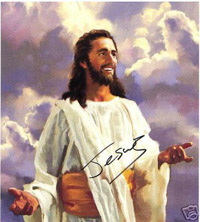
jesus-autograph-200

It began with an innocent question posed on one of the “ask the expert” sites. Someone wanted to know the value of a Superman autograph. The kindly expert explained that Superman was a fictitious character, and that there might be some value to autographs of persons who had played the role.

That got me thinking about fictitious autographs. Not fake autographs of real people but those of, say, Sherlock Holmes or Paul Bunyon or Nancy Drew. I wondered if anyone had tried to sell such a thing.

I asked around. Oddly, the name that came up most often from dealers was “Jesus.”

Now, that poses a dilemma. Continue reading “LiteratEye #3: Really Great Sermon, Sir; Could I Have Your Autograph?”

LiteratEye #2: Author Keven McQueen Recalls A Master Prankster of Yesteryear

Here’s the second installment of LiteratEye, a new series, only on The Art of the Prank Blog, by W.J. Elvin III, editor and publisher of FIONA: Mysteries & Curiosities of Literary Fraud & Folly and the LitFraud blog.


LiteratEye #2: Author Keven McQueen Recalls A Master Prankster of Yesteryear
By W.J. Elvin III
February 20, 2009

mulhattanIt is quite possible that the name “Joseph Mulhattan” does not set bells ringing and lights flashing in the minds of modern readers, even if those readers seriously appreciate pranks and hoaxes. Keven McQueen may correct that regrettable state of affairs one day, when he finalizes his book on one of the master pranksters in journalism history.
Mulhattan’s bizarre news articles – perhaps hundreds – were often swallowed whole by the press and public of his era. “Mulhattan convinced our ancestors that a lost race of Aztecs had lived in Kentucky, that a meteor had demolished a sizable portion of Texas, that trained monkeys were a threat to American labor and that two moons orbited the earth. The last two hoaxes even fooled some scientists,” McQueen told me, adding: “Some of his tall tales survive today in the form of what we now call urban legends.”

Mulhattan was a very successful traveling salesman by trade but it was his sensational “news” that secured a position in the national spotlight. According to McQueen, Mulhattan was as well known in his day as Mark Twain or Jules Verne. He convinced many readers that the bodies of George Washington and Abraham Lincoln were to be exhumed and put on display, viewable for a fee, in celebration of the Centennial in 1876. A story attributed to him about David Lang, a Kentuckian who disappeared in thin air before witnesses, still appears today as a “strange but true” report. His tale of trained monkeys replacing farm laborers provoked angry editorials and brought hate mail to the innocent farmer whom Mulhattan mischievously credited with the innovation. Continue reading “LiteratEye #2: Author Keven McQueen Recalls A Master Prankster of Yesteryear”

LiteratEye #1: George Washington Lied About Taxes

We’re pleased to announce the debut of LiteratEye, a new series, only on The Art of the Prank Blog, by W.J. Elvin III, editor and publisher of FIONA: Mysteries & Curiosities of Literary Fraud & Folly and the LitFraud blog.

Literary deception is John’s “beat” and he has agreed to send us a “casebook” dispatch each week for the foreseeable future. Says John, “When literary fraud is exposed it’s usually pretty well covered in the mainstream press, but seems to me they often overlook a good story in who dug it out and how. Sometimes it’s forensics but other times it’s just chance, someone remembers something that puts the work in a questionable light.”

Here, in honor of President’s Day, is John’s first post:


LiteratEye #1: George Washington Lied About Taxes
by W.J. Elvin III
February 13, 2009

Prepare to be shocked and appalled

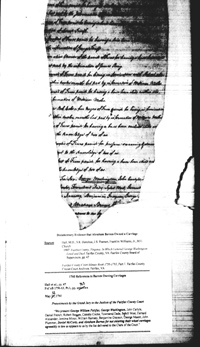
Minute Book 1756 page 463Few believe, surely, that George Washington never told a lie, or even that he confessed to chopping down one of his father’s cherry trees, as his early biographer Parson Mason Locke Weems suggested. Weems saw nothing wrong with a bit of fabrication when it served his purposes. Neither, for that matter, did Washington.

Well, if that’s so, what lie did George Washington tell? Name one. No doubt revisionist historians could provide a few dozen, but up until recently I certainly couldn’t have done it. I ran across this little nugget while researching other matters in old newspapers, the sort of thing I do in putting together Fiona, a magazine about literary fraud and folly.

I ran my discovery past Rick Shenkman, editor of History News Network, and he replied that there is no mention of it in the papers of George Washington. I don’t know if that means “and therefore it’s a crock,” or perhaps “good for you, you’ve rescued a valuable anecdote from the dustbin of history.” Possibly neither.

At any rate, evidence in colonial court records, stolen during the Civil War from Fairfax Court House in Virginia but since recovered, indicates that George Washington once faced charges of “swearing a false oath” – that is to say, telling a lie in order to dodge taxes. Continue reading “LiteratEye #1: George Washington Lied About Taxes”