The Strange Saga of Melania Trump’s Speechwriter

In one of many remarkable moments in this year’s Republican National Convention, potential First Lady Melania Trump delivered a speech blatantly plagiarized from incumbent First Lady Michelle Obama. A little-known Donald Trump speechwriter named Meredith McIver showed up to take the blame, sparking conspiracy theories. And things have stayed weird.


“Who’s Impersonating Melania Trump’s Plagarist Meredith McIver?”
by Gideon Resnick
The Daily Beast
August 2, 2016

meredith-mciver-melania-trump-8Meredith McIver, a former ballerina turned Donald Trump co-author, is definitely a real person. But her social media persona, which came into being after she took the blame for Melania Trump”s plagiarized speech, definitely is not.

The account @imeredithmciver began tweeting on July 20, the day after Melania Trump”s prime-time Republican National Convention speech was upended by the revelation that she had cribbed some lines from an address by Michelle Obama at the 2008 Democratic National Convention. And it is still posing as McIver to this day, with no comment or pushback from the Trump campaign.

As the campaign is in the throes of daily sparring with a Gold Star family, fire marshals, and even the speaker of the House, there”s been no acknowledgment of the fake social media presence of McIver, who told The Daily Beast she has no online presence. Multiple people have emailed The Daily Beast claiming to have some knowledge about the mysterious appearance of the account, ranging from abject satire to claims the Trump campaign is actually behind it.

“I just wanted to set the record straight. @realDonaldTrump is a wonderful man,” the account tweeted just as McIver was getting roped into the burgeoning scandal. With her social media proclamation, the account included a photoshopped image of McIver and Trump standing next to each other in his office. Continue reading “The Strange Saga of Melania Trump’s Speechwriter”
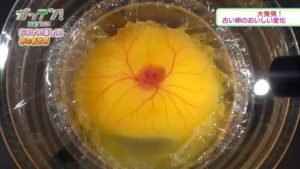
Step 1: Crack a Raw Egg Open into a Glass; Step 2: Hatch a Chick?

Thanks Andrea Marini (director of Art of the Prank, the movie) for this tip.


“Did Japanese students really hatch a chick outside a shell?”
by Robert Ferris
CNBC Science
June 8, 2016

103700352-maxresdefault.530x298A video making the rounds on the internet depicts a group of Japanese students cracking an egg, dropping it into a plastic pouch, and incubating it until a baby chick emerges several days later.

The video has received about 50 million views on Facebook, and other versions have popped up on YouTube and other platforms.

A video making the rounds on the internet depicts a group of Japanese students cracking an egg, dropping it into a plastic pouch, and incubating it until a baby chick emerges several days later.

The video has received about 50 million views on Facebook, and other versions have popped up on YouTube and other platforms.

Though questions remain surrounding the video’s authenticity, the process is possible, according to E. David Peebles, a professor of poultry science at Mississippi State University. In fact, this is not the first time such a thing has been attempted.

“I remember seeing a similar kind of thing when I was in a lab North Carolina State University,” Peebles told CNBC in an interview. “They had relatively limited success with it, but they did have some success.” Read more here and watch the video below.

Taking the Bot Bait

Donald Trump has used Twitter more aggressively than any other political figure in the short history of the service. He has built a large and pugnacious fanbase that will do his bidding and shout down anyone or anything that challenges him. Even if it’s a bot.


“A Twitter Bot Is Beating Trump Fans”
by Ben Collins
The Daily Beast
June 14, 2016

Many Donald Trump supporters on Twitter spent Tuesday afternoon unknowingly arguing with a robot.

@Assbott, which mostly tweets about professional wrestling and baseball, was created to immediately reply to Trump”s tweets, then respond with nonsense sentences to any user who interacts with it. But many of the presumptive Republican nominee”s fans didn”t recognize it wasn”t a person and continued fighting with it until they finally abandoned the conversation. About 10 users per hour continued tweeting at @Assbott well into Tuesday night.

@Assbott is the brainchild of a Kentucky man named Forrest, who identifies himself as @Nasboat on Twitter and declined to give his last name.

48865581.cached“The bot is just a mishmash of my tweets. @AwfulJack is the one who started the account. I”m clueless on the technical side,” he told The Daily Beast. “There had been a few other bots made from other users we know and follow, and I thought it was a funny concept and wanted one of my own. I sent him my archive, and he got it up and running.” Read more.


The King of Comment-Section Trolls Unveiled

Meet Ken M, an uncommonly sharp internet troll whose mix of surreal humor and remarkable tenacity has helped him build a fanbase.

“The world’s greatest internet troll explains his craft”
by Phil Edwards
Vox
May 6, 2016

“How does an internet troll build his own following?

That’s a question that Ken McCarthy, a.k.a. Ken M, can answer: He’s the subject of a dedicated subreddit with more than 150,000 fans, as well as popular Facebook and Twitter pages. And that following is all for … leaving comments. As the above video shows, those comments are funny enough to create a legion of devoted fans.

Calling Ken a troll is a bit of a category error “” though he does lure in commenters with false premises and hilariously mistaken information, his act is more like a new kind of improv comedy. To my critical eye, he’s an internet love child of early Smothers Brothers and Jack Handy, with a dash of Greg Packer, too. (Packer is a non-comedian famous for showing up as the “man on the street” in countless news articles, the same way Ken M is likely to pop up in comment sections.)

Ken experiments a lot. His persona easily transforms from that of a confused old man to a punctilious professor, but the result always has the same absurd sense of humor. Though his audience changes as well “” he shifts between news comment sections and branded Facebook pages, among others “” he adapts to each with jokes that he constructs on the fly.”


YouTube Pranksters Jailed

The rise of YouTube has shifted the way people think about media, fame, and, definitely, pranks.

YouTube’s “user-created content” has always been conspicuously subject to Sturgeon’s Law, but over time, its most popular and influential celebrities have concentrated their power while newcomers have found it harder and harder to break through.

“YouTube pranksters” generally perform “social experiments” (read: wacky stunts) in public, preferably for unwitting audiences. As their attention economy becomes more stratified, certain performers have become increasingly confrontational and occasionally felonious.

The UK-based channel TrollStation operates on the genre’s outer fringes. TrollStation affiliates have violently broken the law and alienated some in the YouTube community before, but achieved peak notoriety with two fake museum heists on July 5, 2015, that just landed three (more) of them behind bars. Their sentences were light – 20 weeks is nothing for genuine art theft or violent B&E – and their case was complicated by the fact that, although they definitely horrified innocent bystanders, they didn’t actually steal anything.

Upon release, they can doubtless expect increased viewership.

For the details, read Katie Rogers’ May 19, 2016 article in The New York Times, “When YouTube Pranks Break the Law”.