Why Hollywood Culture’s Outspoken (Fake) Mystery Critics Threw in the Towel Remains a Mystery

Twitter’s ‘Mystery Hollywood’ implodes: @MysteryExec was a fake
by Josh Dickey
Mashable
August 20, 2015
@MysteryExec, @MysteryVP Thumbnails
@MysteryExec, @MysteryVP thumbnails

The Twitter handle @MysteryExec, the most prominent voice in a small and tight-knit community of showbiz types who for years have tweeted anonymously, candidly and often about their batshit crazy profession, deleted his account sometime late Tuesday night. So did his sidekick, the tart-tongued @MysteryVP.

The reason: Mystery Executive is not an executive at all. Mystery VP is vice president of nothing.

They were catfish. And that’s too bad.

Multiple sources close to the people behind the accounts tell Mashable that @MysteryExec and @MysteryVP were a young male/female writing duo just trying to make it in Hollywood whose prank turned into a mini-phenomenon. What started as an outlet for their frustration turned into a movement that thousands of people, including this writer and dozens of prominent players in Hollywood, readily bought into.

And in recent months, as the ruse began to unravel, the entire Mystery showbiz-on-Twitter community began to crumble, too.

Read the whole story here.


Truman Capote’s Last Write: A Fake Non-Fiction Masterpiece

Reprinted from 1992 by Longform.org, here’s the fascinating unraveling of Truman Capote’s mysterious and clearly fake “non-fiction account of an American crime”.


Hoax: Secrets That Truman Capote Took to the Grave
by Peter and Leni Gillman
Sunday Times Magazine
June, 1992

Uncovering the real story behind a supposedly true account.

Truman Capote

Joe Fox was astounded. On his desk, this late autumn day in 1979, was a manuscript bearing the name of Truman Capote. Two months before, Capote had promised Fox a “surprise,” but Fox had been unimpressed: as Capote’s long-suffering editor at the New York publishing company, Random House, he had grown weary of his endless promises. Now Capote had delivered a manuscript to rank with his masterpiece, In Cold Blood.

Published 13 years before, Capote’s true-life account of the murder of a ranching family in Kansas had brought him literary acclaim, with status and royalties to march. Yet Capote had written nothing to match it since. He had supposedly been working on a novel, Answered Prayers, but for more than a decade Fox had watched deadlines come and go with nothing from Capote but a series of excuses.

The gossip-mongers of the literary world were proclaiming that Capote was burnt out, his sources of inspiration dissipated by alcohol and cocaine. Now Capote had confounded them all by delivering a sequel to In Cold Blood. He called it Hand-Carved Coffins, adding the potent subtitle: “A non-fiction account of an American crime.”

Read the whole story here.


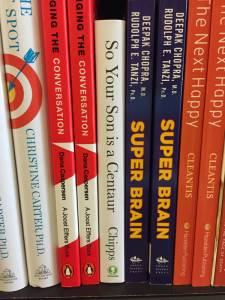
Can You Spot the Fake Self-Help Books?

“I went to a bookstore and asked the saleswoman, ‘Where’s the self-help section?’ She said if she told me, it would defeat the purpose.”
– George Carlin

centaurWriting shallow self-help volumes is the last refuge of the soi-disant expert who hasn’t managed to crank out a livelihood doing anything more useful.

The genre rose with the Human Potential Movement and is still around to give us an endless litany of reasons to be miserable. If you want to improve your circumstances and adjust to these times, try developing some skepticism.

Self-help has always been a fat target for pranksters and satirists. One wily redditor carries on the tradition by creating his own glaring fakes and sneaking them into bookstores alongside the “legitimate” titles. Have a look! Is there really much of a difference?

So far, the top comment reads, “Joke’s on you. You have people interested in these books that want to buy them.”


Fakes, Lies, and Forgeries Exhibition

From Marty Elvin:

The Milton S. Eisenhower Library of Johns Hopkins University presents:


Fakes, Lies & Forgeries

Fakes, Lies & Forgeries
George Peabody Library Exhibition Hall
17 East Mount Vernon Place
Baltimore, Maryland
October 5, 2014–February 1, 2015

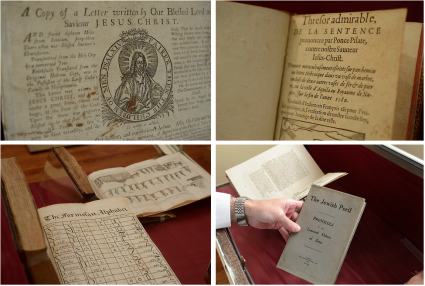
In 2011, Johns Hopkins University acquired the world”s most comprehensive collection of rare books and manuscripts on the history of forgery in the West, some 1,700 items in all spanning the ancient world to the 20th century. This exhibition of 70 treasures from the collection explores the phenomenon of forgery as a creative literary form, and addresses particular highlights of this extraordinary gathering of scholarly materials from classical antiquity to the early decades of the 20th century.

Bibliotheca Fictiva

Highlights will include: editions of Jesus” posthumous “Letter from Heaven,” eyewitness accounts of the Fall of Troy, the only surviving autograph of the martyr Thomas Beckett, unpublished manuscript verses of Martin Luther expositing “The Lord”s Prayer, annotated books from Shakespeare”s personal library, Continue reading “Fakes, Lies, and Forgeries Exhibition”

Catching Up With Serial Fabulist Stephen Glass

Hanna Rosin attempts to square up with her former bestie, one of American journalism’s most notorious bullshitters.

Bonus: Longform.org has a confounding collection of essays on frauds in journalism.


“Hello, My Name Is Stephen Glass, and I”m Sorry”
By Hanna Rosin
The New Republic
November 10, 2014

He nearly destroyed this magazine. Sixteen years later, his former best friend finally confronts him.

shattered-glass2

The last time I talked to Stephen Glass, he was pleading with me on the phone to protect him from Charles Lane. Chuck, as we called him, was the editor of The New Republic and Steve was my colleague and very good friend, maybe something like a little brother, though we are only two years apart in age. Steve had a way of inspiring loyalty, not jealousy, in his fellow young writers, which was remarkable given how spectacularly successful he”d been in such a short time. While the rest of us were still scratching our way out of the intern pit, he was becoming a franchise, turning out bizarre and amazing stories week after week for The New Republic, Harper”s, and Rolling Stone””each one a home run.

I didn”t know when he called me that he”d made up nearly all of the bizarre and amazing stories, that he was the perpetrator of probably the most elaborate fraud in journalistic history, that he would soon become famous on a whole new scale. I didn”t even know he had a dark side. It was the spring of 1998 and he was still just my hapless friend Steve, who padded into my office ten times a day in white socks and was more interested in alphabetizing beer than drinking it. When he called, I was in New York and I said I would come back to D.C. right away. I probably said something about Chuck like: “Fuck him. He can”t fire you. He can”t possibly think you would do that.”

I was wrong, and Chuck, ever-resistant to Steve”s charms, was as right as he”d been in his life. Continue reading “Catching Up With Serial Fabulist Stephen Glass”