Taxidermied Anteater Fools Photography Contest Judges

Well, it was alive at some point…


Wildlife photo competition disqualifies ‘stuffed anteater’ image
by Jonathan Amos
BBC Science Correspondent
27 April 2018

A winning entry in the Wildlife Photographer of the Year competition has been disqualified for featuring a taxidermy specimen.

The image, known as The Night Raider, shows an anteater moving towards a termite mound in a Brazilian reserve.

Mr Cabral said flashes and a long exposure were needed to capture the scene

London’s Natural History Museum, which runs the competition, says the use of stuffed animals breaches its rules.

The photographer, Marcio Cabral, denies he faked the scene and claims there is a witness who was with him on the day.

Other photographers and tourists were in the park at the same time and therefore “it would be very unlikely anyone wouldn’t see a stuffed animal being transported and placed carefully in this position”, he told BBC News.

But Roz Kidman Cox, the chair of judges for Wildlife Photographer of the Year (WPY), was stern in her criticism.

“This disqualification should remind entrants that any transgression of the rules and spirit of the competition will eventually be found out,” she said.

The taxidermy specimen is held at a visitors’ centre at an entrance to the park

The Night Raider picture won the Animals In Their Environment category in the 2017 WPY awards. It was taken in Emas National Park. Continue reading “Taxidermied Anteater Fools Photography Contest Judges”

The Anti-Algorithm Hat

For savvy fashionista paranoiacs, tinfoil just won’t cut it anymore.


“There’s Now a Hat That Can Fool Facial Recognition Technology”
By Sean Keach
The Sun
March 23, 2018

Scientists have invented a baseball cap that can trick facial recognition tech into thinking you’re someone else entirely.
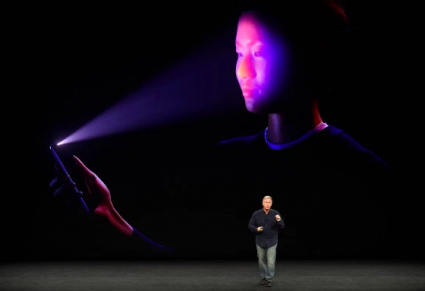
The hi-tech headwear uses laser dots to fool software like Apple’s Face ID, which works by scanning your face to identify who you are.

Scientists at China’s Fudan University laced the inside of the cap with tiny LED lights, which project infrared dots onto your face.

These dots aren’t visible to the naked eye, but they’ll be picked up by facial recognition systems.

Apple’s iPhone face-scanning works by using an infrared blaster to project dots all over your face. By tracking these dots, it can work out the structure of your face — and identify you. Read more.

Disinformation at the Speed of Light

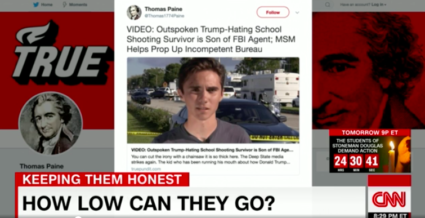
At a time of unspeakable tragedy, Russian propagandists and right wing conspiracy theorists work together to neutralize a rational, well-spoken high school student pleading for safe schools.


How the Florida school shooting conspiracies sprouted and spread
by Paul P. Murphy and Gianluca Mezzofiore
CNN
February 22, 2018

(CNN)Conspiracy theories after mass shootings follow a familiar thread and the Florida school shooting is no exception.

They originate in the dark corners of the internet — often from the 4chan “politically incorrect” board (abbreviated as /pol/) — and migrate onto social media platforms like Twitter, YouTube and Facebook from conservative pages, alt-right personalities, nationalist blogs and far-right pundits.

What drives hoaxes and conspiracy theorists is unclear. But their faith in the conspiracies they spread seems to be unwavering.

Less than an hour after the shooting at Marjory Stoneman Douglas High School in Parkland on February 14, Twitter accounts were claiming that eyewitnesses were “crisis actors.” The term refers to people who are paid to play disaster victims in emergency drills. More recently, though, the phrase has been co-opted by conspiracy theorists who claim mass shootings are events staged to achieve a political goal.

A CNN investigation into 4chan’s /pol/ archive counted at least 121 times that school shooting survivor David Hogg was mentioned on the board. Read the rest of this article here.

Well, Here’s a Novel Phone Prank… Threatening Pro-Trump Robocalls

Gizmodo investigates confusing robocalls warning people to stop criticizing President Trump. Some of the recipients are harsh Trump critics, some aren’t. Some known political provocateurs may or may not be involved, and no one really gets it.


“People Are Getting Robocalls About Their ‘Derogatory’ Trump Posts”
by Kashmir Hill
Gizmodo
November 29, 2017

Brett Vanderbrook was driving for Uber last week when he got a call from an unfamiliar number. He let it go to voicemail and when he listened to it later, he got a shock: It was a recorded message telling him to stop making “negative and derogatory posts about President Trump.”

“It was kind of threatening. I was dumbfounded at first and then creeped out,” Vanderbrook, who lives in Dallas, Texas, said in a phone interview. “Then I was angry and that”s when I decided to share it.”

Vanderbrook makes progressive political posts on Facebook, voicing support for gun control, LGBTQ rights, and immigrant rights. None of his public posts mention President Trump or come across as “derogatory.”

Vanderbrook is not alone, though. Across the country, and even in Canada, people have reported on social media that they”ve received the same robocall. The earliest complaint dates back to July. The intensity of the calling campaign is hard to gauge; a search of complaints turned up 10 reports scattered across different platforms.

The reports, though, are all consistent. When the call goes to voicemail, as it did for Vanderbrook, the beginning of the recording gets cut off, but people describing the calls on Twitter, Facebook, and the telemarketer-reporting site ShouldIAnswer.com have said that the recording claims to come from “Citizens for Trump.” Read more.