
He made his money in tech and he’s investing it in new toys — data analytics and international politics. With his sights set on the media, his ultimate target is your heart and mind.
“Robert Mercer: The Big Data Billionaire Waging War on Mainstream Media”
by Carol Cadwalladr
The Guardian
February 26, 2017
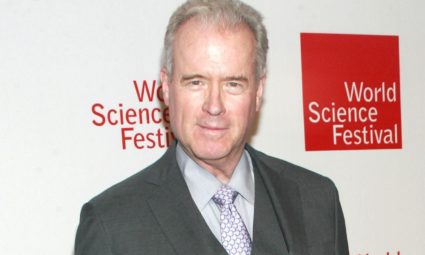 Robert Mercer very rarely speaks in public and never to journalists, so to gauge his beliefs you have to look at where he channels his money: a series of yachts, all called Sea Owl; a $2.9m model train set; climate change denial (he funds a climate change denial thinktank, the Heartland Institute); and what is maybe the ultimate rich man”s plaything – the disruption of the mainstream media. In this he is helped by his close associate Steve Bannon, Trump”s campaign manager and now chief strategist. The money he gives to the Media Research Center, with its mission of correcting “liberal bias” is just one of his media plays. There are other bigger, and even more deliberate strategies, and shining brightly, the star at the centre of the Mercer media galaxy, is Breitbart.
It was $10m of Mercer”s money that enabled Bannon to fund Breitbart – a rightwing news site, set up with the express intention of being a Huffington Post for the right. It has launched the careers of Milo Yiannopoulos and his like, regularly hosts antisemitic and Islamophobic views, and is currently being boycotted by more than 1,000 brands after an activist campaign. It has been phenomenally successful: the 29th most popular site in America with 2bn page views a year. It”s bigger than its inspiration, the Huffington Post, bigger, even, than PornHub. It”s the biggest political site on Facebook. The biggest on Twitter.
Prominent rightwing journalist Andrew Breitbart, who founded the site but died in 2012, told Bannon that they had “to take back the culture”. And, arguably, they have, though American culture is only the start of it. In 2014, Bannon launched Breitbart London, telling the New York Times it was specifically timed ahead of the UK”s forthcoming election. It was, he said, the latest front “in our current cultural and political war”. France and Germany are next. Continue reading “Meet New Alt-Right Media Power-Broker Robert Mercer”
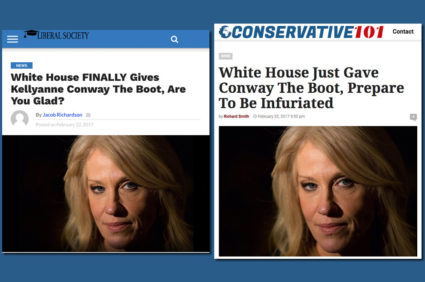 The websites Liberal Society and Conservative 101 appear to be total opposites. The former publishes headlines such as “WOW, Sanders Just Brutally EVISCERATED Trump On Live TV. Trump Is Fuming.” Its conservative counterpart has stories like “Nancy Pelosi Just Had Mental Breakdown On Stage And Made Craziest Statement Of Her Career.”
 The United States is currently experiencing a fake news crisis “” bogus news articles disguised to look like real ones to mislead people, influence public opinion, and/or to simply use their
  Cameron Harris