This could hardly be more timely, so we’re revisiting Maria Popova’s Brainpickings review of “The Fine Art of Baloney Detection,” a chapter from Carl Sagan’s book The Demon-Haunted World: Science as a Candle in the Dark
“The Baloney Detection Kit: Carl Sagan”s Rules for Bullshit-Busting and Critical Thinking”
By Maria Popova
BrainPickings
January 3, 2014
 Sagan reflects on the many types of deception to which we”re susceptible “” from psychics to religious zealotry to paid product endorsements by scientists, which he held in especially low regard, noting that they “betray contempt for the intelligence of their customers” and “introduce an insidious corruption of popular attitudes about scientific objectivity.” (Cue in PBS”s Joe Hanson on how to read science news.) But rather than preaching from the ivory tower of self-righteousness, Sagan approaches the subject from the most vulnerable of places “” having just lost both of his parents, he reflects on the all too human allure of promises of supernatural reunions in the afterlife, reminding us that falling for such fictions doesn”t make us stupid or bad people, but simply means that we need to equip ourselves with the right tools against them.
Through their training, scientists are equipped with what Sagan calls a “baloney detection kit” “” a set of cognitive tools and techniques that fortify the mind against penetration by falsehoods:
The kit is brought out as a matter of course whenever new ideas are offered for consideration. If the new idea survives examination by the tools in our kit, we grant it warm, although tentative, acceptance. If you”re so inclined, if you don”t want to buy baloney even when it”s reassuring to do so, there are precautions that can be taken; there”s a tried-and-true, consumer-tested method.
But the kit, Sagan argues, isn”t merely a tool of science “” rather, it contains invaluable tools of healthy skepticism that apply just as elegantly, and just as necessarily, to everyday life. By adopting the kit, we can all shield ourselves against clueless guile and deliberate manipulation. Sagan shares nine of these tools. Read more.
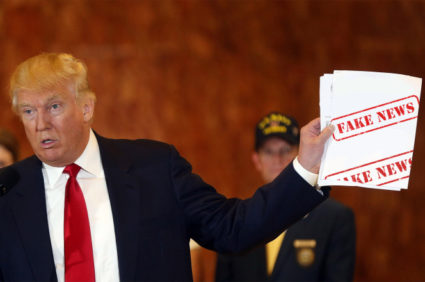 Fake information will pervade mature economies in the next few years, a new study has noted.
 “It was early March, not yet two months into the Trump administration, and the new Not-Normal was setting in: It continued to be the administration”s position, as enunciated by Sean Spicer, that the inauguration had attracted the “largest audience ever”; barely a month had passed since Kellyanne Conway brought the fictitious “Bowling Green massacre” to national attention; and just for kicks, on March 4, the president alerted the nation by tweet, “Obama had my “˜wires tapped” in Trump Tower.”
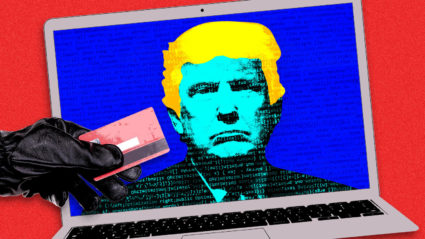 Cybercriminals selling drugs and stolen credit cards have adopted an unlikely new branding trend on the so-called dark web. A host of black-market dealers are using the brand, name and likeness of the 45th president to upsell their shipments of ecstasy, cocaine, and ketamine.