Submitted by Erin Clermont:
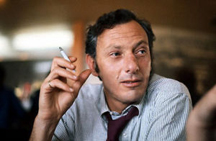 I was obsessed by Clifford Irving back in the day. And I happened to be working at CBS News, so I got the dope on a daily basis. My obsession was based on my unerring (IMHO) instinct that he was lying, from day one, so it was a fantastic experience watching the whole thing unravel, over months, at a network news organization. My boss, Walter Cronkite, wasn’t as interested.
No more than two years later I was working at a literary organization. We didn’t have a receptionist, so whoever was closest to the door answered it. That day I answered a knock and a presentable though borderline seedy guy said, proudly, “I’m Clifford Irving!” I was speechless. All I could think to say was “I always knew you were lying!”–so I passed on the hello.
That face-to-face ranks as one of the most celebrity non-thrill sightings of my life. I still have no respect for Irving. He was a swindler, which is not a “prank” — he went for major bucks, which was $1 million in those days, though it sounds like chump change now. Seeing “The Hoax,” I now realize Irving was fresh out of jail when I met him. Ha. OTOH, the movie made me reasess the quality of the Hughes bio he wrote, which, after all copies were destroyed, has never been reissued. Irving was rather brilliant as a hoax biographer and, using investigative reporter techniques, fashioned a credible biography of the reclusive Hughes.
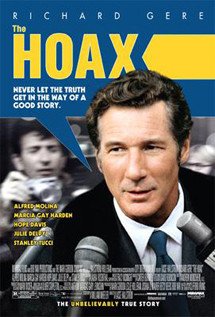 Gere may have topped his career with this performance. He’s terrific as Irving. Cast in the role of Nina Van Pallandt, who turned her Irving sexual liaison into a Hollywood career, is the delicately beautiful and talented Julie Delpy. Unlikely choice–Nina was a big Nordic beauty. And wasn’t she in Gigolo with Richard Gere? Ironic.
Lots of great, early ’70s decor and props in this film. So-called stock footage is used for a scene of a Washington demo against the Vietnam War. Front and center is a guy who looks just like Joey Skaggs. Coincidence?
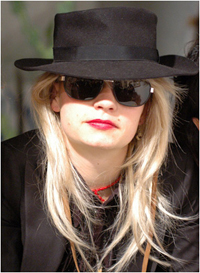 Author JT Leroy