 The smirking array of pranks, stunts, and fake marketing drives has become a predictable April Fool’s Day rite. Our finest brands and capital-C Creative Teams use this opportunity to trot out wacky ideas and to attempt to out-clever each other in a quest for attention.
You can set your sundial by it, but that’s no reason, in itself, to complain. Plenty of brand-based April Fool’s japes are entertaining, and a few pack genuinely subversive elements.
Sunday finds the virtual prank parade already in progress. The clowns have been rolling out all week, in acknowledgement of the holiday schedule, and probably as part of a phenomenon similar to Christmas Creep, in which April Fool’s Day threatens to slowly engulf more and more of the year.
There are few unique challenges against which this year’s festival of cleverness must contend. April Fool’s Day falls on a Sunday, and on the Easter holiday, widely observed in nations where influential marketers and media entities are based. It also falls against a background characterized by extreme distrust and hostility toward advertisers, Silicon Valley tech giants, and a political climate in which the US presidential administration’s most favored PR approach resembles gaslighting. Increasingly, the media treat April Fool’s brand stunts with outward cynicism and exhaustion.
 In the wake of the Cambridge Analytica controversy that is grinding away at Facebook, tech brands face a tough room this year. Google, in particular, has always embraced cheeky self-awareness in its pranks, a winking sense of, “everyone seems to think we’re going to control the world someday – and wouldn’t it be kind of neat if we did?” This year’s battery of GOOG yuks, including a “bad joke detector” and an API for different varieties of hummus, acknowledges the inherent absurdity of Google’s algorithmic, data-driven approach to world domination. Google’s work is state-of-the-art in terms of creative skill, but it feels at least few weeks behind the times.
 In the Scott Dikkers taxonomy of jokes, irony and parody are hard to make stick in 2018. Gentle absurdity, wordplay, and “madcap” humor may be an easier plan.
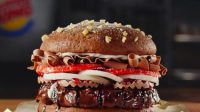
Coinciding with Easter Sunday may make it harder to nab eyeballs, but some brands are using it to their advantage. The Chocolate Whopper is one of many gags that draws ridiculous associations with holiday sweets. Following up the success of the emoji car horn, one of the most charming 2017 stunts, Honda returns with another winning exercise in pure silliness. One tech company simply gave a crapload of money to people who need it, which may be the most heartwarming and unorthodox 4/1 tactic on record.
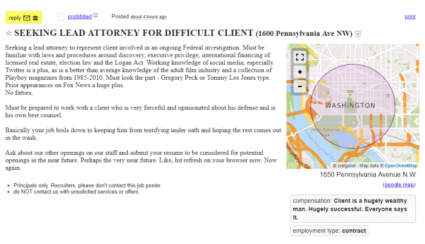 In the non-commercial realm, artists and social critics are addressing the elephant in the room, head on. From anonymous Craigslist pranksters to our own head honcho Joey Skaggs and his annual April Fool’s Day parade, there’s plenty of puckish and ambitious parody directed at Trump and his inherently ridiculous milieu.
Arguably, the best thing that can come from the widespread crisis in confidence that is 2018 is a greater premium on critical thinking and the importance of placing our relentless and exhausting news cycle in its broader context.
As usual, Atlas Obscura does rigorous yet unpretentious work putting curiosities and absurdities against the backdrop of history, in an entertaining and approachable fashion. All week, it has showcased examples of old-school irreverence, from bird dung to a theoretical cactus, as a reminder that high-profile pranks have always been with us, and their spirit is always worth preserving and celebrating. (Thanks to Dr. Bob O’Keefe for the tip on this one.)
 In mid-2016,
  It was a unique restaurant in London and certainly the hardest to get into. And it beat out thousands of upscale restaurants in the city to earn the top ranking on the popular review site TripAdvisor for a time, drawing a flood of interest.
 In a booth on the Westside of Los Angeles sit a trio of conservative provocateurs plotting their next “street art” prank on a liberal celebrity destined to be thrust into the limelight for reasons beyond the person’s control. The restaurant has become a watering hole for conservatives who work in Hollywood and don”t usually share their political opinions with their liberal colleagues for fear of retribution.