Submitted by W.J. Elvin III: British Journalism 101: Don’t let facts stand in the way of a good story…
British Newspapers Make Things Up
by Satoshi Kanazawa
Psychology Today
January 24, 2010
 In April 2008, I wrote that British journalists interpret “freedom of the press” to mean that they can make up anything they want and publish it as fact in British newspapers. Now another evolutionary psychologist has learned the lesson the hard way.
In the earlier post, I explain that, by the American standards, all British newspapers are tabloids because they don”t distinguish between what is true and what they make up. I knew this from my own experiences of dealing with British journalists, but, as it turns out, even the British government admits, in an official government publication, that British newspapers make things up and report them as facts.
Most British people consider the Times of London to be the most respectable “broadsheet” newspaper (as opposed to “tabloid” newspapers) in the UK, despite the fact that the Times, along with most British “broadsheet” newspapers, is now published in the tabloid size to make it easier for people to read it in crowded London subways. Last week, the Sunday Times published an article with the headline “Blonde women born to be warrior princesses.” The article reported that “Researchers claim that blondes are more likely to display a “warlike” streak because they attract more attention than other women and are used to getting their own way – the so-called “princess effect.”” The Times article quotes the evolutionary psychologist at the University of California – Santa Barbara, Aaron Sell, and his findings are purportedly published in his article in the Proceedings of the National Academy of Sciences, written with the two Deans of Modern Evolutionary Psychology, Leda Cosmides and John Tooby.
As it turns out, however, none of this is true, as Sell explains in his angry letter to the Times. He and his coauthors do not mention blondes at all in their paper and they don”t even have hair color in their data. The supplementary analyses that Sell performed after the publication of the paper, as a personal favor to the Times reporter, show the exact opposite of what the Times article claims. After he presumably listened to Sell explain all of this on the phone, the Times reporter nonetheless made up the whole thing, and attributed it to Sell. Continue reading “Freedom of the Press vs. The Truth”
 and the
 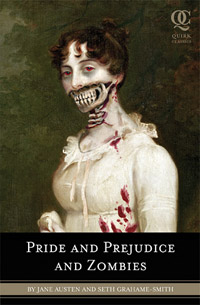 It seems a sad thing that writers who keep on pumping out books after they are dead aren’t around to enjoy the benefits. Maybe there are literary awards passed out in heaven? “Best Book By A Recently-Deceased Author.”
 Well, what do you think? Did film heart-throb Hedy Lamarr actually say that or was the quote concocted by her ghostwriter? She was not at all happy with the work of her ghost. She sued the publisher of her autobiography,
  , contending that what wasn’t concocted was wild exaggeration.
 The Associated Press, which is increasingly relied upon by traditional papers dealing with staff cutbacks and by new media news re-“broadcasters” such as Yahoo, is signaling a worrisome shift in what it considers “news.” Here is an excerpt from the Columbia Journalism Review‘s recent story about the AP’s strategy retreat at Lake Placid: