Fake internet comments may be the only thing worse than real internet comments.
“Fake Comments on Trump Administration Website are Trying to Take Down an Obama-era Rule”
By Greg Price
Newsweek
December 27, 2018
 Critical fake comments, attributed to a real person, were reportedly posted against a controversial fiduciary rule to the Department of Labor”s website, presumably to convince the department to do away with the rule altogether.
Altogether, 40 percent of people who responded to a survey conducted for The Wall Street Journal stated they did not write the negative comments against the rule first implemented under former President Barack Obama to protect investors and avoid conflicts of interest at brokerage firms and other financial institutions.
The survey was conducted by research firm Mercury Analytics for The Journal. It was sent to 345 people out of the 3,100 comments posted to the Labor Department”s site about the fiduciary rule. Most of the 345 comments were critical of the rule, but of the 50 people to respond to the survey, 20 told The Journal they did not author the critical post.
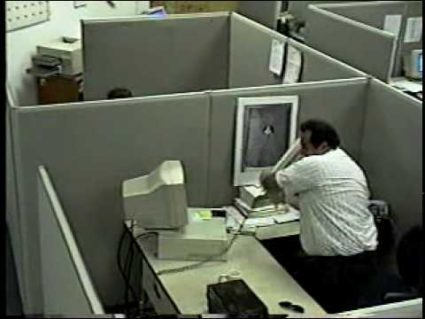 You’ve seen the video. Everyone on the internet has. A man sits in a cubicle and pounds his keyboard in frustration. A few seconds later, the Angry Man picks up the keyboard and swings it like a baseball bat at his screen””it”s an old PC from the ’90s, with a big CRT monitor””whacking it off the desk. A frightened coworker”s head pops up over the cubicle wall, just in time to watch the Angry Man get up and kick the monitor across the floor. Cut to black.
 Drivers entering California are being greeted with signs proclaiming the liberal bastion an “OFFICIAL SANCTUARY STATE,” according to photos and videos circulating on social media appearing to show a prankster attached the official-looking blue signs just below legitimate “Welcome to California” markers.
 From the earliest days, and continuing for decades and even centuries, promoters of the New World enticed colonizers with the promise of riches, causing the historian Daniel Boorstin to suggest that ‘American civilization [has] been shaped by the fact that there was a kind of natural selection here of those people who were willing to believe in advertising’:
 A woman who falsely claimed to The Washington Post that Roy Moore, the Republican U.S. Senate candidate in Alabama, impregnated her as a teenager appears to work with an organization that uses deceptive tactics to secretly record conversations in an effort to embarrass its targets.