Excavating Society’s Ever Changing Values on Art

Spencer Pelton, the State Archeologist from Wyoming, has written a compelling history of what happens when today’s values don’t match yesterday’s intent.

h/t Beauvais Lyons


The Centaur Excavations at Volos, by Spencer, Social Stigma, March 13, 2026

Using repatriation to stage an art heist.

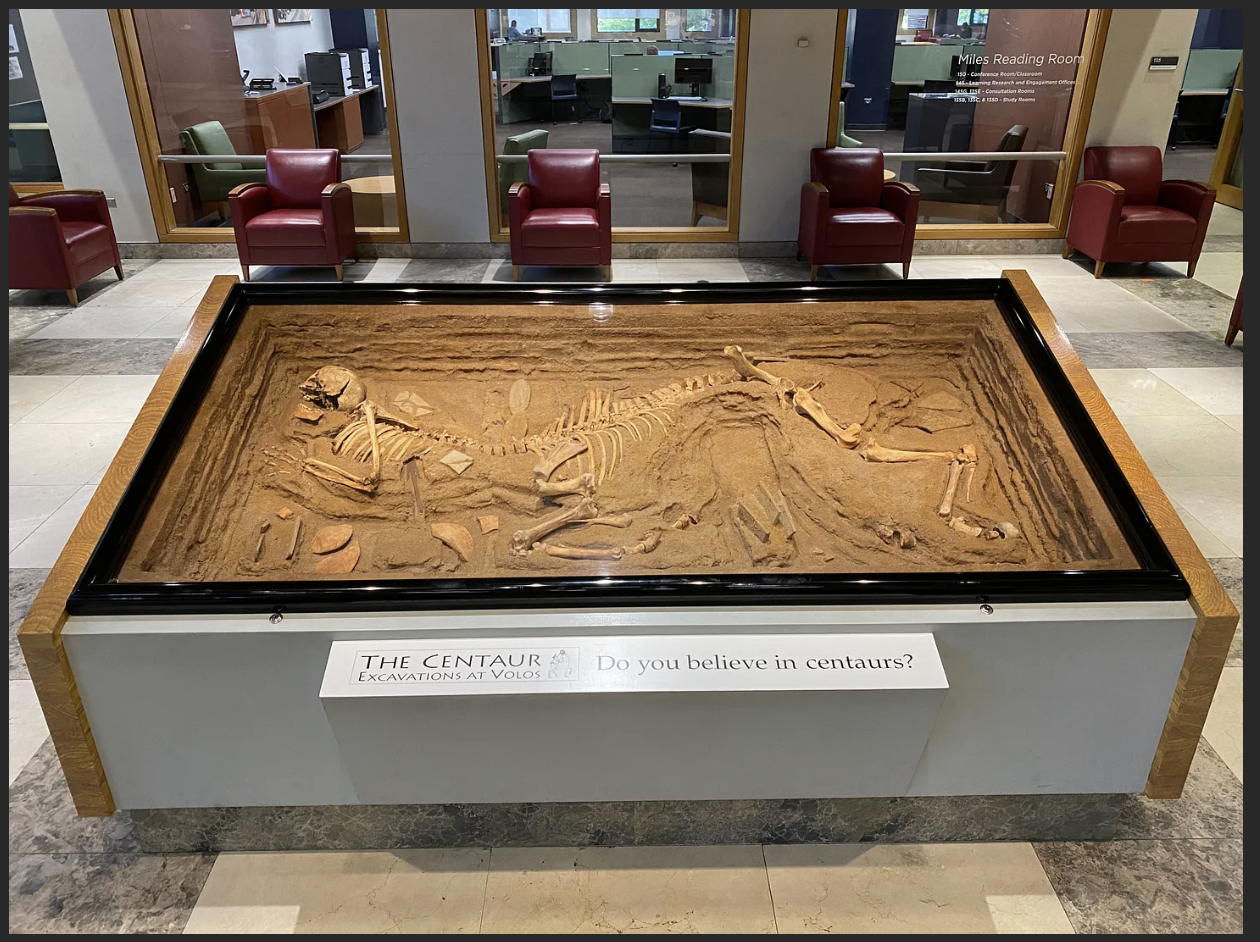
In 1980, archaeologists working near the shores of the Aegean Sea uncovered a remarkable find. Peeling back layers of sediment in an ancient necropolis, they first encountered the head of an ancient Grecian man, mouth agape as if surprised to have been awoken from an ancient slumber. They traced the neck further down his body, gently brushing away sediment from the convoluted contours of the vertebrae, finding arms where arms should be and shoulder blades the same. But as they continued, the man’s character changed. Where there should be a pelvis, there was more spine, and then second sets of ribs and legs, not altogether human. As the archaeologists brushed the final bits of sediment from a third set of legs, the shocking reality of their discovery came into focus. The mythical centaur of old Greece, entombed with a modest assemblage of tablets and vessels for over 3,000 years.

This is, of course, not true. But it is an accurate description of The Centaur Excavations at Volos, an art installation located until recently for 30 years in the lobby of the University of Tennessee’s (UT) Hodges Library. I visited The Centaur many times growing up around UT’s campus. As a young child, I’m pretty sure I believed it. As a teen, I scoffed at those fooled by it. And later, I came to appreciate the piece for its ability to inspire curiosity and conversation. Read the whole article here.


It Might Be Time To Do The Laundry

Art as religion:


“Shroud of Turin didn’t wrap Jesus’ crucified body — it was just art, new research claims,” by Ben Cost, New York Post, August 1, 2025.

This holy linen’s origins remain shrouded in mystery.

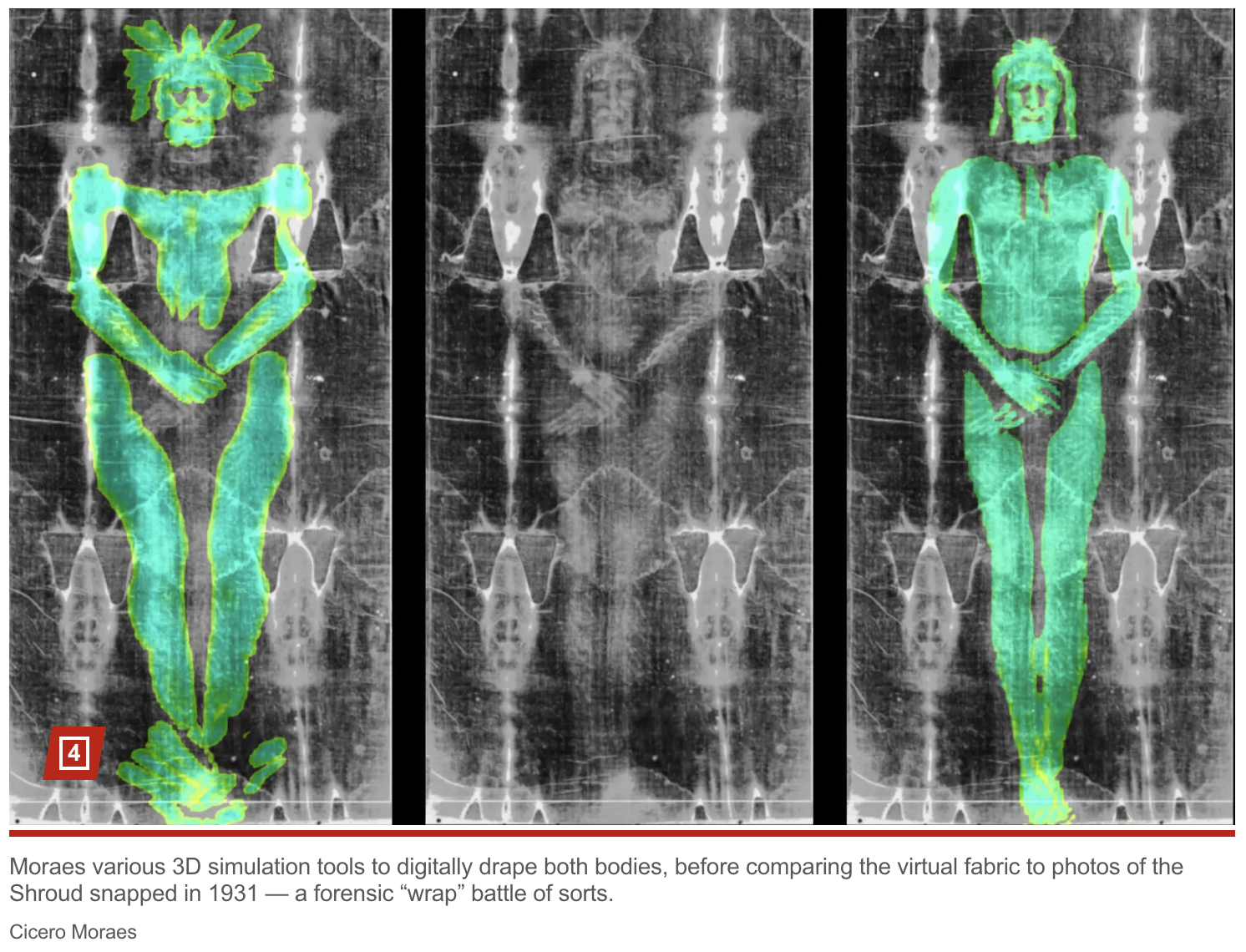
Contrary to popular belief, the sacred Shroud of Turin was not used to cover Jesus’ post-crucifixion and was actually a recreation created by artists, per a study published in the journal Archaeometry.

“The Shroud’s image is more consistent with an artistic low-relief representation than with the direct imprint of a real human body,” Brazilian 3D digital designer Cicero Moraes, who used modeling software, wrote in the paper, per the Daily Mail.

Read the whole article here.

Citroën’s WWII Subterfuge Remembered

True or not, this is an inspiring bit of sabotage.


Citroën Sabotaged Wartime Nazi Truck Production in a Simple and Brilliant Way
by Jason Torchinsky
Jalopnik.com
July 24, 2019

Citroen

In case you forgot to change the batteries in your calendar, you may not be aware that this year is the 100th anniversary of Citroën. We’ve been shooting a Jason Drives special mini-series for this centenary, and while doing some research I happened to stumble upon a fascinating bit of wartime Citroën lore. It involves screwing with Nazis in a genuinely clever and subtle way that nevertheless had big repercussions. I’ll explain.

So, when France was occupied by the Germans in 1940, major French factories like Citroën were forced to produce equipment for the Nazis. Citroën president Pierre-Jules Boulanger knew he couldn’t just refuse to produce anything, but he also knew there’s no way in hell he’s going to just roll over and build trucks for a bunch of filthy Nazis. Pierre had a plan.

John Reynolds’ book Citroën 2CV describes Boulanger’s sabotage efforts. Of course, he instructed workers to set a nice, leisurely pace when building trucks (likely Citroën T45 trucks) for the Wermacht, but that’s fairly obvious. What was brilliant was Boulanger’s idea to move the little notch on the trucks’ oil dipsticks that indicated the proper level of oil down just a bit lower.

By moving the notch down, the trucks would not have enough oil, but German mechanics would have no idea, because, hey, the little notch on the dipstick says its just fine. Then, after the truck has been used for a while and is out deployed somewhere crucial, whammo, the engine seizes up, and you’ve got a lot of angry, stranded, vulnerable Nazis, balling up their little fists and redly barking curses in German.

It’s such a fantastic act of sabotage: it’s extremely cheap to implement, it’s subtle, there’s no way to see something amiss is happening as the trucks are being built, and it delivers its blow away from the site of the sabotage and when it will cause the most inconvenience and trouble.

I suppose it could be apocryphal, but this is one of those cases where I’m going to choose to believe.

That’s some mighty good sabotaging, Pierre.

When Urban Legends Become Dangerous

Whether or not the Momo Challenge exists, just the thought of it is perceived as dangerous. Read more about it on Snopes.com.


Viral Momo Hoax Makes Schools Across the Country Ban YouTube
by Kelly Weill
March 4, 2019

Kim Kardashian fell for a hoax last week, now schools are falling for it too.

Momo—the stringy-haired, bird-faced puppet lady taunting children—is an overhyped hoax, but no one seems to have told schools, which are banning YouTube in response.

In the so-called “Momo Challenge,” the creepy figure allegedly tells children to complete increasingly dangerous stunts, such as leaving a stove on, supposedly ending with suicide. But the videos are an urban legend, and YouTube says it has no evidence of the trend on its site aside from some obviously staged hoax videos.

Nevertheless, Florida’s Palm Beach County School District blocked YouTube for its 193,000 students last week, out of fear that children would see Momo. Stockton, California’s Lincoln Unified School District went on a similar digital lockdown Thursday. The same day, Arkansas’ Jacksonville North Pulaski School District blocked YouTube searches for “Momo” on school computers.

Palm Beach County sent a district-wide email to the principals of a hundred-plus schools on Friday, announcing a temporary YouTube ban on school computers, WPTV first reported. The email reportedly claimed students had seen Momo appear while they watched educational videos.

A modern urban legend, the Momo panic has spread through unconfirmed rumors like these. Continue reading “When Urban Legends Become Dangerous”

Rudolph the Red-Nosed Reindeer Debunked

Snopes sheds light on the origins of another beloved Christmas myth: “The story of Rudolph the Red-Nosed Reindeer… was developed for commercial purposes by a Montgomery Ward copywriter at the specific request of his employer…”


Rudolph the Red-Nosed Reindeer
Snopes.com

Was Rudolph the Red-Nosed Reindeer created to bring comfort to a girl whose mother was dying of cancer?

CLAIM
The character ‘Rudolph the Red-Nosed Reindeer’ was created by a father to bring comfort to his daughter as her mother was dying of cancer.

WHAT’S TRUE
Rudolph the Red-Nosed Reindeer was created by a man whose wife was dying of cancer.

WHAT’S FALSE
The story of Rudolph was created by a father to bring comfort to his daughter as her mother lay dying of cancer.

ORIGIN
To most of us, the character of Rudolph the Red-Nosed Reindeer, immortalized in song and a popular holiday television special, has always been an essential part of our Christmas folklore, but Rudolph is in fact a mid-twentieth century invention whose creation can be traced to a specific time and person

Read the whole story here.