
LinkNYC Mister Softee Prankster Comes Clean

Payphone performance artist/activist drops a dime on himself…


My Summer of Softee Prank
by Mark Thomas.

In this year of 2019, I use payphones regularly. As such, I feel fortunate to live in New York City, where thousands of old-fashioned landline payphones still line the streets.

A few years ago, when news came that the City decided to replace every single outdoor payphone with LinkNYC Internet kiosks, preëmptively pronouncing this unproven replacement the “payphone of the future”, I felt a bit of an affront. How could a decision reaching so deeply into the social fabric of New York be made? Was public input ever solicited regarding this decision that all payphones must be replaced by an unproven, unneeded alternative?

I gave LinkNYC a chance but soon came to loath not only the program but, in almost all respects, the so-called “Smart City” itself. Born of unearned municipal privilege, the arrogant ineptitude of the LinkNYC rollout at times made me cringe.

To express my sentiments about LinkNYC, I subverted their intended purpose. I regarded these kiosks as unwanted, unneeded irritants and turned the machines themselves into irritants, using them as a broadcast platform, blasting ridiculously loud noises and music out of the kiosks’ loudspeakers.

This became a social media engineering project for me for most of 2018. Continue reading “LinkNYC Mister Softee Prankster Comes Clean”

Speaking Truth to Power in DC

Street theater is flourishing in the era of Trump.


DC’s many prankster activists turn anger into street theater
by Ashraf Khalil
AP
February 18, 2019

Mike Green and Adam Eidinger with Radical Matriarchy
WASHINGTON (AP) — In the nation’s capital, it can be hard for protesters to stand out. A group of 50 people — or even 500 — holding signs and shouting hardly merits a second glance in this city of protests.

That’s why Washington activists have to get creative. There’s an ethos of performative prankster-style protest wired into the District of Columbia’s history, dating back decades.

This confrontational street-theater school is flourishing with the Trump administration as its nemesis. Each month brings new acts of political theater — some confrontational, some deliberately absurdist.

“It can take a serious issue into more of a playful place,” said Robin Bell, who regularly projects disparaging messages onto the outside of the Trump International Hotel. “Oftentimes we visualize the absurdity of the situation.”

In January, a group of activists associated with political pranksters The Yes Men passed out dozens of fake Washington Posts, with detailed articles depicting President Donald Trump resigning and fleeing the White House. For about a month last fall, a Robert Mueller investigation-themed ice cream truck roamed Washington, passing out free scoops with names like IndictMint Chip and Rocky Rod Rosenstein.

While some protests are designed to get attention, others hide in plain sight like Easter eggs for the observant. Within sight of the White House, a realistic-looking street sign declares the street Khashoggi Way, after Jamal Khashoggi, the dissident Saudi journalist killed inside the Saudi Consulate in Istanbul. About 10 of these signs have been scattered around Washington.

Read the rest of this article here.

Google Street Theater

Italy vs. Google–from Street View to street theater?
by Edward Moyer
CNET News
October 23, 2010

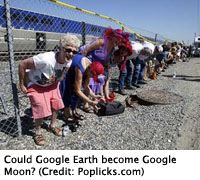
Is Google’s Street View about to become a global forum for street theater?

It might be headed in that direction, if Italian officials get their way. According to a report, Italy has demanded that Google start giving people in that country three-days warning, via radio and newspapers, as to when its Street View cars will be roaming the stradas collecting images to plaster all over the Web.

The demand, picked up by PC Magazine from a report in La Stampa, is hardly surprising. As my colleague Chris Matyszczyk has pointed out, the Street View cars have captured plenty of strange imagery–dead bodies in Brazil, barfing Brits, ale-addled and outhoused Aussies. Not exactly stellar PR shots for the local tourist board or chamber of commerce. (And, as Matyszczyk has also noted, the Italians seem especially touchy about their worldwide reputation, even going so far as to target an innocent iPhone app for suggesting that–gasp–people might actually associate Italy with… the Mafia.)

Then, of course, there are the personal privacy concerns. Continue reading “Google Street Theater”