419 scams (a/k/a “NIGERIAN PRINCE” emails) have long, long fascinated certain quarters of the internet. They’ve flooded inboxes with outsider poetry and inspired satire and scambaiting, a prankish and dangerous literary subgenre explored at length in the fascinating work of journalist Eve Edelson
Craigslist killers, social media “catfishing” scams, and the internet vigilantes of Anonymous now get much more attention, making 419ers look like relics, at least by internet standards. And yet, great work still emerges from the scambaiter milieu.
Here’s the absurd story (from 2013) of how a few intrepid 419-eaters orchestrated the cover of Vice, for posterity.
“How We Got the Skammerz Ishu Cover”
By Mishka Henner
Vice
December 17, 2013
Scam-baiting is a form of internet vigilantism in which the vigilante poses as a potential victim to expose a scammer. It”s essentially grassroots social engineering conducted as civic duty or even amusement, a cross-cultural double bluff in which participants on separate continents try to outdo each other in an online tug-of-war for one”s time and resources – and the other”s private banking information.
The baiter begins by “biting the hook” – answering an email from the scammer. The “victim” feigns receptivity to the financial lure, engaging the scammer in a drawn-out chain of emails. The most important element of baiting is to waste as much of the scammer”s time as possible – when a scammer is preoccupied, it prevents him from conning genuine victims.
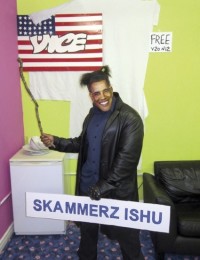 The cover of the issue you”re looking at is a trophy from the most elaborate bait I”ve ever been involved in. Three scammers, spread across Libya and the United Arab Emirates, set the con. They posed as a widow named Nourhan Abdul Aziz, a doctor named Dr. Ahmadiyya Ibrahim and a banker going by Ephraim Adamoah. From Nourhan”s initial contact with my associate, Condo Rice, to Ephraim”s actually donning an Obama mask and shooting our cover for us, 7,000 words were exchanged over nearly four months of emails. During that time, Condo and I negotiated our way through a labyrinthine network of fake websites, bogus documents and broken English, and ended up with the weirdest photograph I”ve seen in a long time. Read the actual email correspondence here.