April Fools 2017: This Year in Branded Pranks

April Fool’s Day brings a deluge of cleverness. For journalists covering the arts, entertainment, business, culture, or predictably tech (populated as it is by Stanford and MIT wiseacres), tracking the cuteness can be overwhelming.

At The Verge, Elizabeth Lopatto turns in a thoughtful rant on “the 500-year history of a troll holiday,” including an interview with Alex Boese of the Museum of Hoaxes, that explores why some of us are not big fans of 4/1.

Nevertheless, there’s plenty of fun to be had. The enormous display of creativity and break from the standard shilling grind can be inspiring. And a few marketing stunts shine through with transgressive humor, playful conviviality, or something genuinely important to say. (That, or they’re just joyously dumb.)

Here were a few that stood out in 2017.

MetBnB
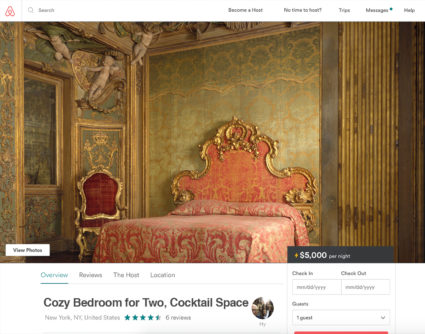
The Metropolitan Museum’s fictitious partnership with the “sharing economy” startup was a lighthearted means of drawing attention to serious commercialization and fundraising challenges in the art world. Continue reading “April Fools 2017: This Year in Branded Pranks”
Not #FakeNews, But an Incredible Simulation

A new video game brings your republic-wrecking fantasies to life.


If you were for some reason dying to play a video game about fake news, it’s here now
by Marissa Wenzke
Mashable
March 27, 2017

This fake news simulator is the depressing video game America deserves

It’s something that’s come to be reviled, the very thing that may have cost America a presidential election “” fake news.

And the horrible phenomenon that’s been called out by everyone from former President Barack Obama to Apple CEO Tim Cook now has a video game all about it.

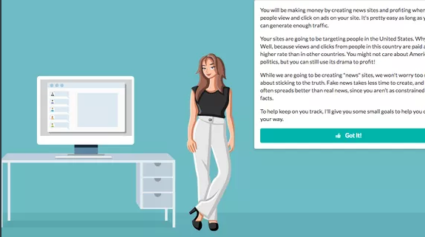
Yes, you can actually climb inside the minds of real-life humans who distribute lies for money. Fake It to Make It describes itself as “a social impact game about fake news.”

By that definition, it’s less a celebration of fake news and more a socially conscious dissection of it. Well, that’s at least what it’s intended to be, as its creator Amanda Warner explains.

“I think that better understanding how and why we are manipulated by others, for profit or power, is worthwhile knowledge to have,” she told The Verge.

The game takes you through a journey that mirrors the stories of real-life fake news creators. For instance, it starts by asking you to choose a purchase you want to make, like a $1,000 used car or $400 for a deposit on an apartment (deals we think questionably exist IRL). Read more.


How to Diversify Your Biased News Portfolio

Ever get the feeling you’re being pandered to? You don’t know the half of it. Here’s a company that hedges all bets in order to assure they get your ad dollars.


“This Is How Your Hyperpartisan Political News Gets Made”
by Craig Silverman
Buzzfeed News
February 27, 2017

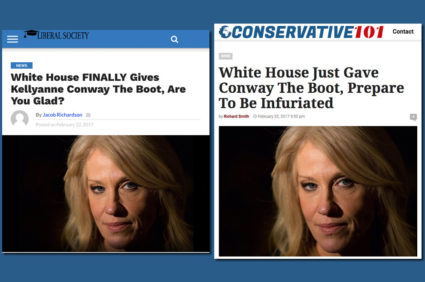
The websites Liberal Society and Conservative 101 appear to be total opposites. The former publishes headlines such as “WOW, Sanders Just Brutally EVISCERATED Trump On Live TV. Trump Is Fuming.” Its conservative counterpart has stories like “Nancy Pelosi Just Had Mental Breakdown On Stage And Made Craziest Statement Of Her Career.”
So it was a surprise last Wednesday when they published stories that were almost exactly the same, save for a few notable word changes.

After CNN reported White House counselor Kellyanne Conway was “sidelined from television appearances,” both sites whipped up a post “” and outrage “” for their respective audiences. The resulting stories read like bizarro-world versions of each other “” two articles with nearly identical words and tweets optimized for opposing filter bubbles. The similarity of the articles also provided a key clue BuzzFeed News followed to reveal a more striking truth: These for-the-cause sites that appeal to hardcore partisans are in fact owned by the same Florida company.

Liberal Society and Conservative 101 are among the growing number of so-called hyperpartisan websites and associated Facebook pages that have sprung up in recent years, and that attracted significant traffic during the US election. A previous BuzzFeed News analysis of content published by conservative and liberal hyperpartisan sites found they reap massive engagement on Facebook with aggressively partisan stories and memes that frequently demonize the other side”s point of view, often at the expense of facts. Read more.


WhatsApp Fuels India’s #FakeNews Fire

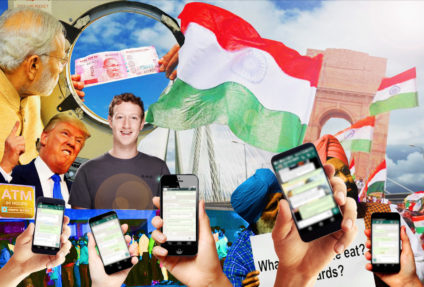
India has a long history of politically motivated hoaxes and guerrilla propaganda. A popular messenger app has thrown it into overdrive.


“Viral WhatsApp Hoaxes Are India”s Own Fake News Crisis”
by Pranav Dixit
Buzzfeed News
January 19. 2017

The United States is currently experiencing a fake news crisis “” bogus news articles disguised to look like real ones to mislead people, influence public opinion, and/or to simply use their massive reach to reap advertising profits. These operations are sophisticated, data-driven, and highly targeted. But in countries like India where internet penetration and literacy still lag far behind the US, misinformation tends to have a more grassroots quality. Twitter is a fertile ground for all kinds of rumormongering, but with just over 30 million users in the country, its impact is limited.
The primary vector for the spread of misinformation in India is WhatApp. The instant messenger is fast, free, and runs on nearly all of India”s 300 million smartphones. It”s also encrypted end-to-end, which means it”s nearly impossible to track what flows through it. Its real-world ramifications, nonetheless, can be brutal.

In November, WhatsApp rumors of a salt shortage sparked panic in at least four Indian states and caused stampedes outside grocery shops as people rushed to stock up. The government eventually debunked the rumours “” but not before a woman died.

India”s misinformation problem predates the internet. In the early “˜90s, rabble-rousers in northern India trying to stir up tensions in Hindu and Muslim communities would mass-produce cassette recordings full of fake gunfire, screams, and chants of “Allah-ho-Akbar,” and then play them in car stereos at full volume in the dead of the night to incite communal violence. Read more.


Pizzagate: Cheesy Hand-tossed Lies

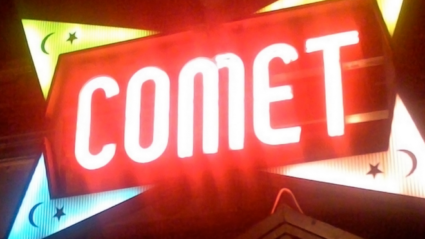
The bizarre tale of Comet Ping Pong restaurant and “Pizzagate” provides a case study in how fake stories proliferate online.
Update: And now it’s somehow gotten darker.
Another update: There is now a direct link between the spread of Pizzagate rumors and the nascent Trump Administration.


“The saga of ‘Pizzagate’: The fake story that shows how conspiracy theories spread”
BBC
December 2, 2016

_92730809_pizzagate3

No victim has come forward. There’s no investigation. And physical evidence? That doesn’t exist either.

But thousands of people are convinced that a paedophilia ring involving people at the highest levels of the Democratic Party is operating out of a Washington pizza restaurant.

The story riveted fringes of Twitter – nearly a million messages were sent last month using the term “pizzagate”.

So how did this fake story take hold amongst alt-right Trump supporters and other Hillary Clinton opponents?

Let’s start with the facts.

In early November, as Wikileaks steadily released piles of emails from Clinton’s campaign chairman John Podesta, one contact caught the attention of prankster sites and people on the paranoid fringes.

James Alefantis is the owner of Comet Ping Pong, a pizza restaurant in Washington. He’s also a big Democratic Party supporter and raised money for both Barack Obama and Hillary Clinton. He was once in a relationship with David Brock, an influential liberal operative.

Alefantis – who’s never met Clinton – appeared in the Podesta emails in connection with the fundraisers.

And from these thin threads, an enormous trove of conspiracy fiction was spun. Read more.