
As long as computers have been part of mainstream life, people have been mad at them. This history of one of the first viral videos tells the tale of how information spreads across the digital landscape. Interestingly… having nothing to do with its enormous popularity… it wasn’t at all what it was purported to be.
“The Strange History of One of the Internet’s First Viral Videos”
By Joe Veix
Wired
January 12, 2018
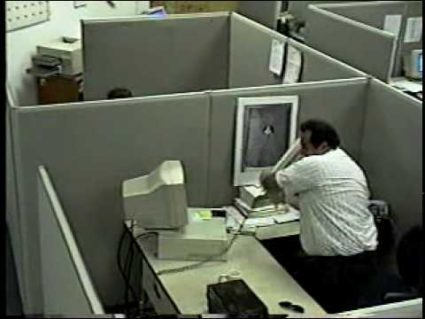 You’ve seen the video. Everyone on the internet has. A man sits in a cubicle and pounds his keyboard in frustration. A few seconds later, the Angry Man picks up the keyboard and swings it like a baseball bat at his screen””it”s an old PC from the ’90s, with a big CRT monitor””whacking it off the desk. A frightened coworker”s head pops up over the cubicle wall, just in time to watch the Angry Man get up and kick the monitor across the floor. Cut to black.
The clip began to circulate online, mostly via email, in 1997. Dubbed “badday.mpg,” it”s likely one of the first internet videos ever to go viral. Sometimes GIFs of it still float across Twitter and Facebook feeds. (Most memes barely have a shelf life of 20 minutes, let alone 20 years.)
Beyond its impressive resilience, it”s also unexpectedly significant as the prime mover of viral videos. In one clip, you can find everything that”s now standard in the genre, like a Lumière brothers film for the internet age: the surveillance footage aesthetic, the sub-30-second runtime, the angry freakout in a typically staid setting, the unhinged destruction of property.
The clip also serves up prime conspiracy fodder. Freeze and enhance: The computer is unplugged. The supposed Angry Man, on closer inspection, is smiling. Was one of the first viral videos””and perhaps the most popular viral video of all time””also one of the first internet hoaxes? Read more.