Egyptian zoo shows its stripes.
Egypt zoo accused of painting donkey to look like a zebra
BBC News
July 26, 2018
A zoo in Egypt has denied painting black stripes on a donkey to make it look like a zebra after a photo of the animal appeared online.
Student Mahmoud Sarhan put the images on Facebook after visiting Cairo’s International Garden municipal park.

Aside from its small size and pointy ears, there were also black smudges on its face.
The pictures quickly went viral, with experts weighing in on the species of the animal.
A vet contacted by local news group Extranews.tv said that a zebra’s snout is black, while its stripes are more consistent and parallel.
Mr Sarhan told Extranews that the enclosure contained two animals and that both had been painted.
This is not the first time that a zoo has been accused of trying to fool its audience.
Unable to find a way around the Israeli blockade, a zoo in Gaza painted two donkeys to look like zebras in 2009.
Another Gaza zoo put stuffed animals on display in 2012 because of the shortages of animals.
In 2013, a Chinese zoo in Henan province tried to pass off a Tibetan mastiff dog as an African lion, and in 2017 a zoo in Guangxi province disappointed visitors by exhibiting blow-up plastic penguins.
Weeks later, another Guangxi zoo drew condemnation for displaying plastic butterflies.
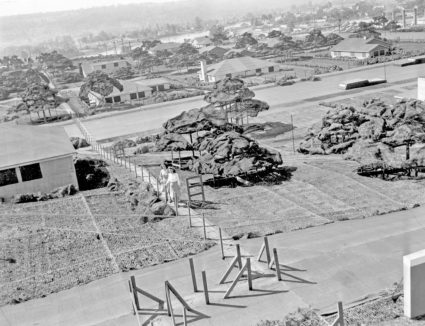
 Boeing”s aircraft manufacturing facilities were critical to the World War II efforts of Allied forces. But the unexpected attack on Pearl Harbor stoked fears of potential aerial assaults by Japanese forces. Some factories put up camouflage netting to disguise structures, but the U.S. Army Corps of Engineers took things a big step further on top of the Boeing Plant 2 in Seattle, crafting an entire faux neighborhood.