Working for Change

Sometimes you need a cloak of invisibility, sometimes you need a coat of armor, and sometimes you just need to go naked! I encourage any attempt to provoke positive change.


Social Malpractice in the Age of Cultural Compliance, by Ed Woodham, Hyperallergic, March 25, 2026.

What happens when the language of social practice becomes a tool of the very systems it once hoped to challenge?
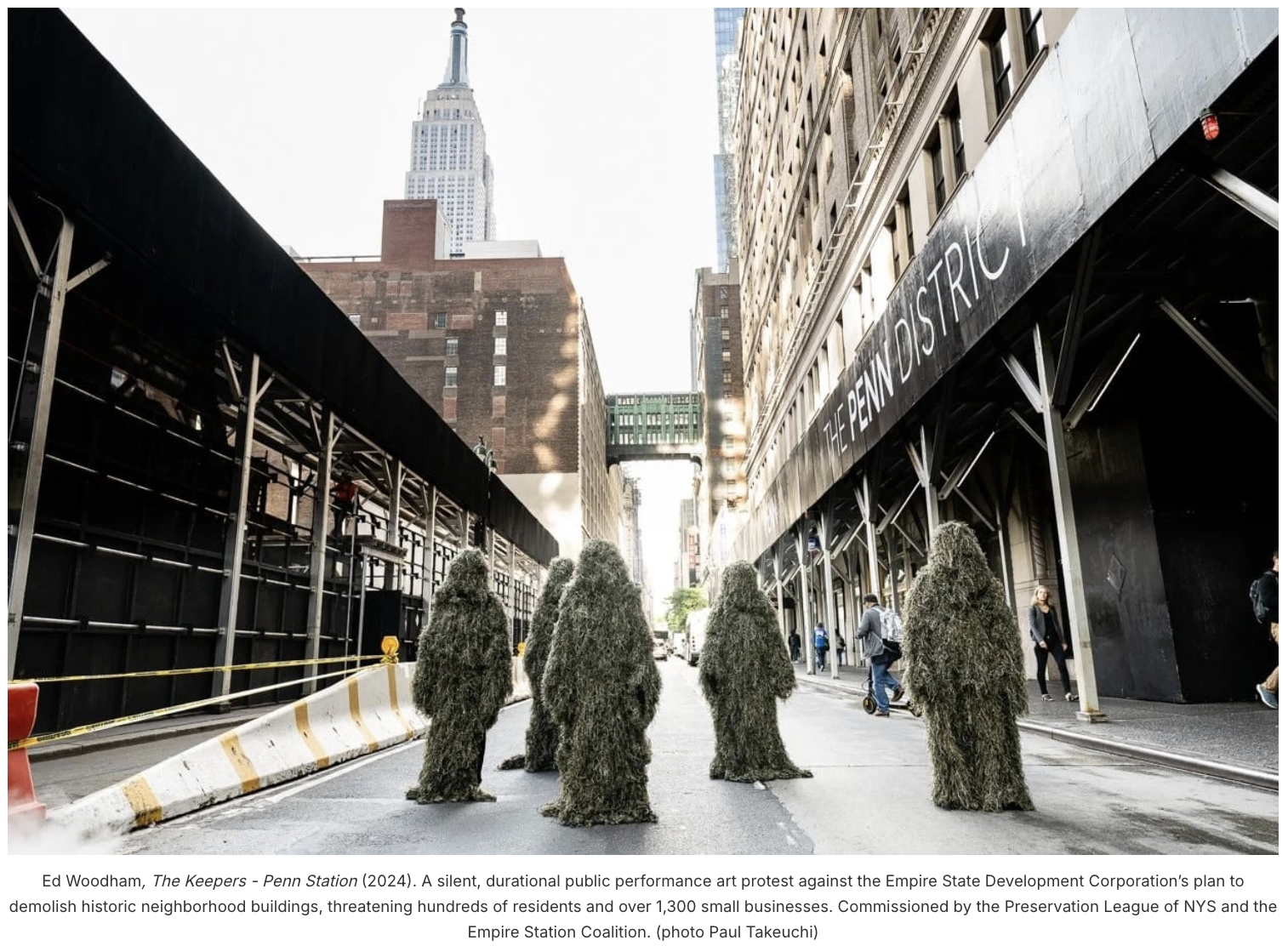
We are living in a strangely apocalyptic moment where a perverse logic runs the machinery of public life while insisting everything is just fine. Around the world, political systems are tightening control over commerce, education, culture, and communication. Independent critical thinking is increasingly treated as subversive rather than a civic virtue. Public space, once the laboratory for egalitarian expression, is shrinking under surveillance, privatization, and corporate branding.

So where does socially engaged art fit into a world progressively hostile to independent thought? Read the whole article here.

In Review: April Fools’ Day 2019 Branding, Marketing, and Media Stunts

Before April Fools’ Day 2019 even began, the tech giant Microsoft announced that it would not be indulging in any branded foolishness this year. And that sort of set the tone for the day.
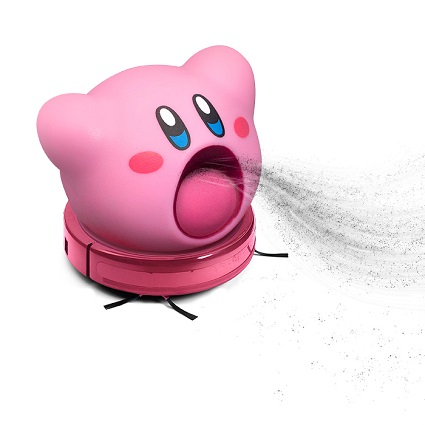
From the rise of the internet and social media through the election of Donald Trump, distinguishing truth from fiction in the online landscape has become less about comedy and more about horror. Even the cutest and cleverest April Fools’ publicity stunts are not as well received as they may have been in the past. The overall online mood is darker, more skittish, and more reflective. Still, there’s still some levity to be found in the chaos and desperation.

A few editorials addressed the cynicism and fatigue around April Fools’ Day from high-level perspectives.

Of the branded pranks that did go down, the most interesting had satirical or meta-comedic elements.

Others were just plain, dumb, silly, marginally self-aware fun. Here are the best of the rest:

And there was even some good news!

As with any holiday, the best way to spend April Fools’ Day is probably not on the internet, but engaged in revelry and camaraderie IRL, fighting the forces of oppression and no-fun-ness in the company of loved ones and loved ones you haven’t met yet. So naturally the best news of the day was the annual April Fools’ Day Parade – see the highlights [HERE].

Consumers: Get Ready to be Marketed by April Fools Day Pranks

On the art of the April Fool’s prank
by Diego Vasquez
Media Life Magazine
March 29, 2011

It has to be far-fetched enough to raise doubts

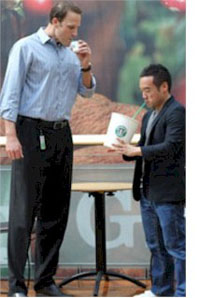
If you didn’t happen to remember that the news was coming out on April Fool’s Day, it sounded plausible. On April 1, 2010, Starbucks announced two new sizes called the plenta and the micra, joining such existing sizes as the grande and venti. The plenta, Starbucks said, would hold 128 ounces of coffee, or roughly six times its biggest size at the time, while the micra would hold 2 ounces. Social networking sites were abuzz over the news, while hundreds voiced their approval or disapproval on the Starbucks web site until they realized the whole thing was a joke. Like the best April Fool’s stunts, it was just realistic enough to be possible, but just ridiculous enough to be questioned. In this case, most people laughed it off as a clever marketing stunt, but not all April Fool’s stunts are as well received. In some cases, it can do damage to an advertiser’s brand. Three days before April 1 arrives, Grant Powell, founder and chief executive officer at the digital agency Pomegranate, talks to Media Life about how advertisers can pull off a smart stunt, which ones have worked in the past, and which ones didn’t.

How can advertisers walk the fine line between showing a sense of humor on April Fool’s Day and not alienating their customers?

There is indeed a very fine line between a well-received prank and one that will leave customers upset. Continue reading “Consumers: Get Ready to be Marketed by April Fools Day Pranks”

Empire of Illusion

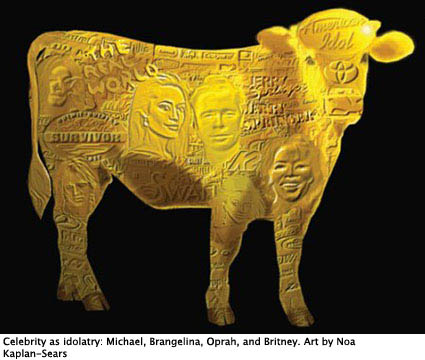
From editor Joey Skaggs: I recommend this piece from The January/February 2010 issue of Tikkun written by Christopher Hedges about the cultural phenomenon of celebrity-ism. Parts are excerpted from his 2009 book, Empire of Illusion: The End of Literacy and the Triumph of Spectacle.


Celebrity Culture and the Obama Brand, by Christopher Hedges

b_celebrity-425

Barack Obama is a brand. And the Obama brand is designed to make us feel good about our government while corporate overlords loot the Treasury, armies of corporate lobbyists grease the palms of our elected officials, our corporate media diverts us with gossip and trivia, and our imperial wars expand in the Middle East. Brand Obama is about being happy consumers. We are entertained. We feel hopeful. We like our president. We believe he is like us. But like all branded products spun out from the manipulative world of corporate advertising, this product is duping us into doing and supporting a lot of things that are not in our interest.

What, for all our faith and hope, has the Obama brand given us?

Read the rest of this article here.