The infamous graffiti artist known as Banksy has finally been unmasked — after changing his name to something so generic, he could hide in plain sight..
The notorious guerrilla street artist, whose polarizing works have sold for millions of dollars, was identified as Robin Gunningham, 51, from the English city of Bristol, in a detailed investigation by Reuters on Friday.
The report found that Gunningham changed his name to David Jones — one of the most common British male names — in 2008 to avoid identification. Read the whole article here.
Prefiguring Banksy’s latest Royal Courts of Justice mural depicting a judge attacking a protester, are centuries of art history where works have been censored or edited.
It could hardly be more brutal in its depiction of the administration of judicial might: a judge, arm raised, wielding a makeshift weapon, delivers his ruling, blow by blow, on the body of the accused, who lies at his feet. No, I’m not talking about Banksy’s recent (and rapidly erased) mural, which the street artist sprayed onto the side of the Royal Courts of Justice in London on 7 September. Banksy’s work, which satirically depicted an English judge in traditional wig and gown, pummelling a prone protester with his gavel as splatters of blood became the very message emblazoned on the blank placard that the protester carried, was partially eradicated by authorities three days later.
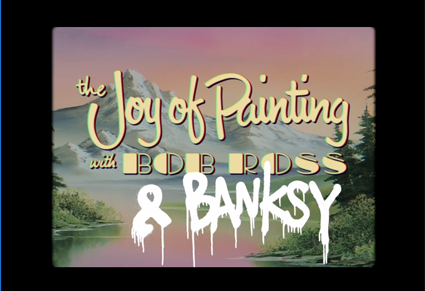
Banksy confirmed the artwork in a clever video stitched together with a Bob Ross tutorial.
Blockbuster street artist Banksy has laid claim to his latest work of public art — an olde tyme prison escape stenciled on the wall of the defunct HM Reading Prison in Reading, Berkshire, England. The prison, also known as Reading Gaol, was built in 1844 and operated until early 2014. Until this week, it was perhaps most famous for housing writer Oscar Wilde during a two-year imprisonment (1895-1897) after a conviction for “gross indecency.” Following his release, Wilde published The Ballad of Reading Gaol, a poem that narrates the 1896 hanging of Charles Thomas Woodridge, convicted of murdering his wife.
The Banksy mural features a figure in prison stripes and a cap. He appears to be climbing down the exterior brick wall on a rope ladder instead of a ream of paper, anchored by a typewriter. The image is likely an allusion to Wilde as Reading’s famous inmate and his subsequent poetic work that both documents Woodridge’s hanging while also identifying with him as a fellow prisoner.
The artist left his work open to speculation for a few days before taking to Instagram with a video documenting the mural’s clandestine application, with narration supplemented by overlay from Bob Ross’s famous public access painting program, The Joy of Painting with Bob Ross. The audio selections first seem to merely narrate the creation of the mural, details of which are captured in the tight halo of the artist’s headlamp, but once we cut to shots of the mural in full view the following day, the audio clips telegraph the artist’s statement on the work. Read the whole article here.
The anonymous artist has opened a shop in the south London borough of Croydon to showcase some of his characteristically humorous items.
photos by Naomi Polonsky
LONDON — Banksy has always had a complicated relationship with the art market. His unsanctioned street works deliberately challenge the idea of art as a tradeable commodity, but often still end up at auction, commanding astronomical prices. A stunt last year during which his “Girl with a Balloon” (2006) self-destructed at a Sotheby’s sale seemed like a rebuke to the art market, but in fact simply doubled the piece’s value.
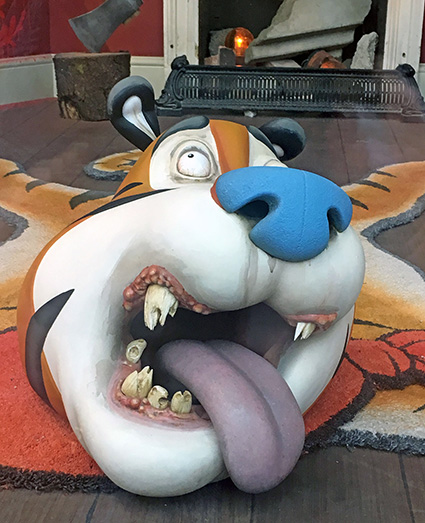
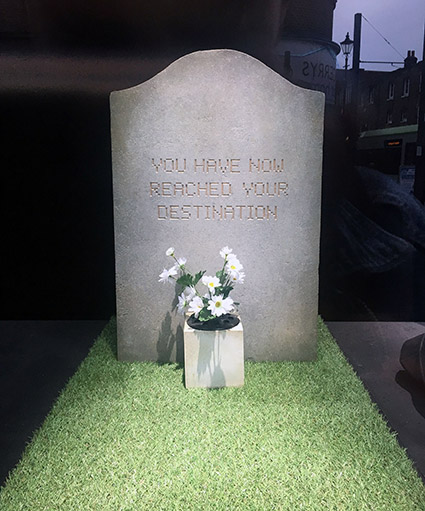
But as of this week, Banksy has officially gone into business. A new installation of his work, unveiled on Tuesday, features a storefront filled with branded merchandise. Although Banksy has exhibited his works in storefront installations before, this is the first time that the items are for sale. All of the products will go on sale online in a couple of weeks with prices starting at £10. Gross Domestic Product, which is located in a disused carpet shop in the south London borough of Croydon, includes old and new works by the artist including the iconic stab vest worn by the grime artist Stormzy at Glastonbury last year…
Playing on the double meaning of “gross,” Banksy’s store stocks various disturbing and unsavoury items, such as a rug made from the skin of Tony the Tiger, who has died of diabetes after eating too much Frosted Flakes cereal. A label, written in Banksy’s characteristically irreverent tone, explains that “the floor covering makes quite the conversation piece — especially if the conversation centres around the UK spending over £7.8 million a year on tooth extractions for the under 5s.”
A good prank attempts to shed light on issues to change perceptions or awareness by jolting sensibilities. MutualArt pays homage to Joey Skaggs’ April Fools’ Day Parade. In 2017, it became real with Trump’s Golden Throne.
Pretty-much-anonymous street artist Banksy was back in the headlines this weekend thanks to his self-shredding picture. We take a look at other classic art-world pranks that have confounded and delighted through history.
.
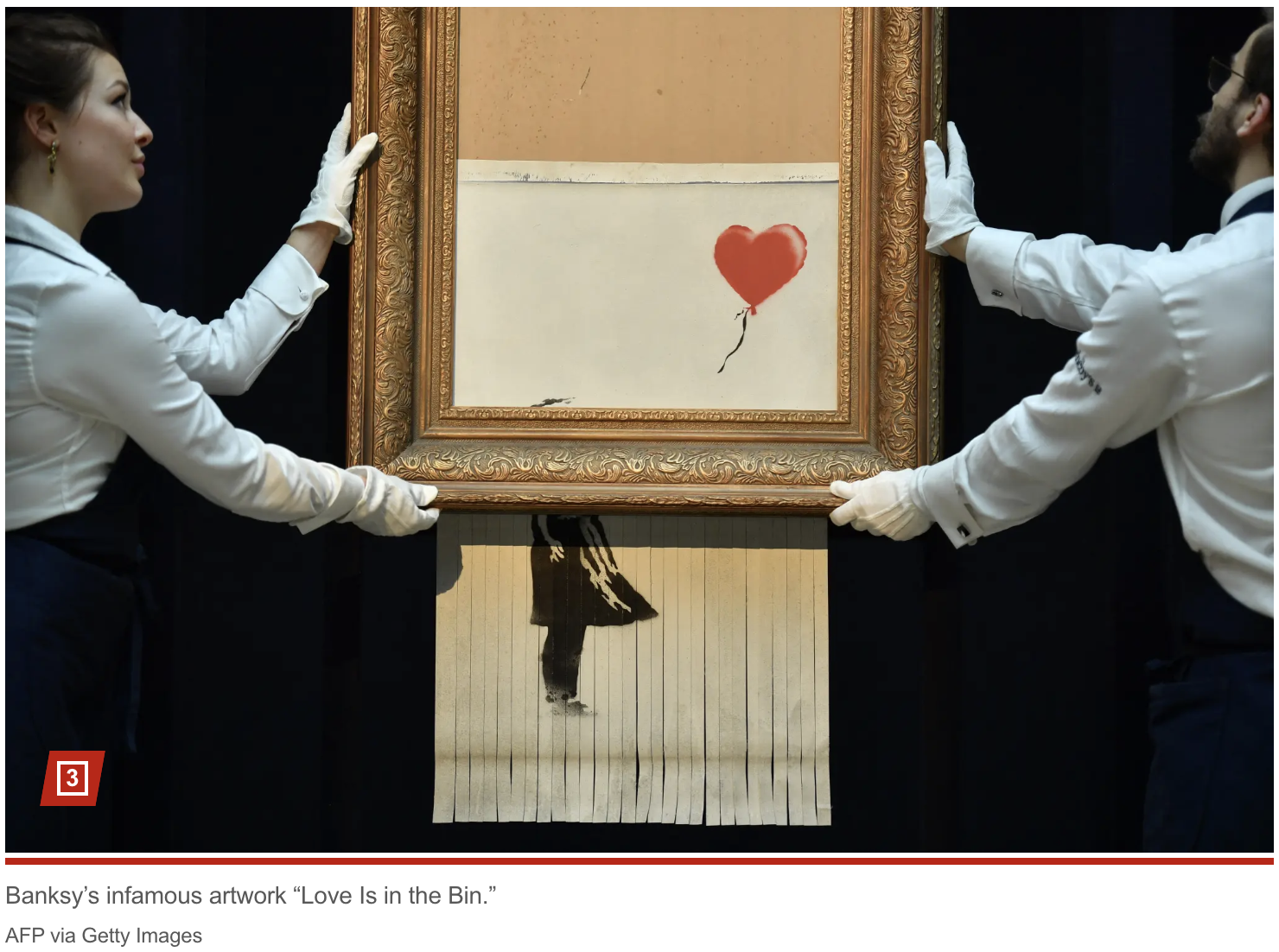
As a street artist and activist, Banksy’s career has consisted almost exclusively of anti-establishment pranks and stunts. On Friday evening, at Sotheby’s Contemporary Art auction, the hammer fell on a print of his Balloon Girl image at a price of $1.1 million. Seconds later, an alarm sounded through the room and the print began feeding through the bottom of its own frame, inside which was a hidden shredder, leaving half of the work in ribbons.
Promptly, the piece’s value doubled. Commodification appears to move as quickly as protest in the contemporary market-place.
Speculation already abounds as to how far Banksy collaborated with Sotheby’s in setting up the stunt. It certainly seems far-fetched that the auction house’s handlers wouldn’t have noticed the machinery in the frame.
But the impact of the prank has been huge, bringing Banksy his biggest burst of media-attention since Dismaland closed. His market-value has increased. Haters have been won over. The search for his true identity is back on. All in all, it’s been a successful prank.
As a space in which publicity, politics, and aesthetics can meet, ‘the prank’ is an established mode within the art world. Here are some of the more prominent and successful examples from art history.
Joey Skaggs is the maybe the most prolific prankster out there. Over the years, the performance artist and writer has staged the thieving of celebrity sperm, “attempted” to “windsurf across the Pacific”, and exposed Western racism by fooling people into thinking that a Chinese businessman was buying dogs to make into soup.
Every April Fools’ Day since 1986, Skaggs has held a Parade with floats, banners, streamers extensive press coverage and pertinent contemporary themes. Except that the Parade doesn’t ever actually take place, existing purely within the press-hype. Fake News.
Until last year, that is. In a neat reversal of his own prank, Skaggs actually did hold a real-life parade on April 1st, 2017 after 31 years of pretending. The march functioned as a protest against Donald Trump’s presidency and was also the largest gathering of Trump-look-alikes in history. The imposters marched to Trump Tower and sat tweeting on golden thrones. Maybe Joey Skaggs’ greatest prank was to make Fake News real.



 .
.