New York City’s greatest pranks, from fantastical parades to a phony Mets star, by Samantha Max, Gothamist, April 1, 2026
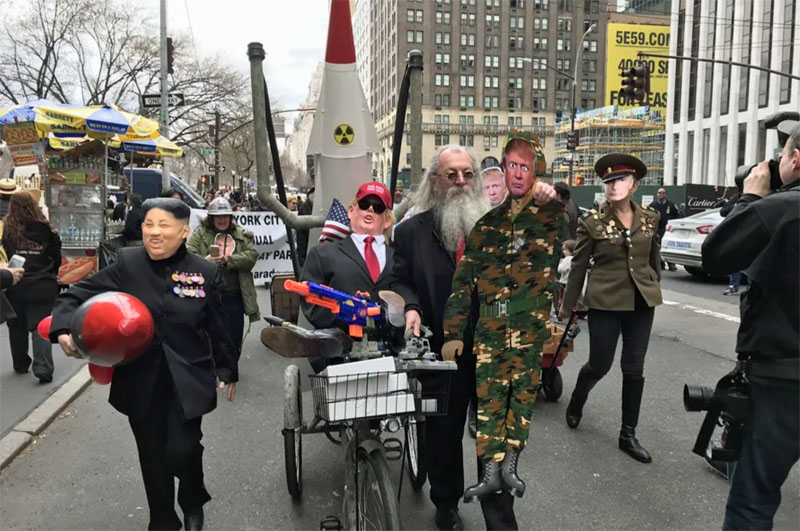
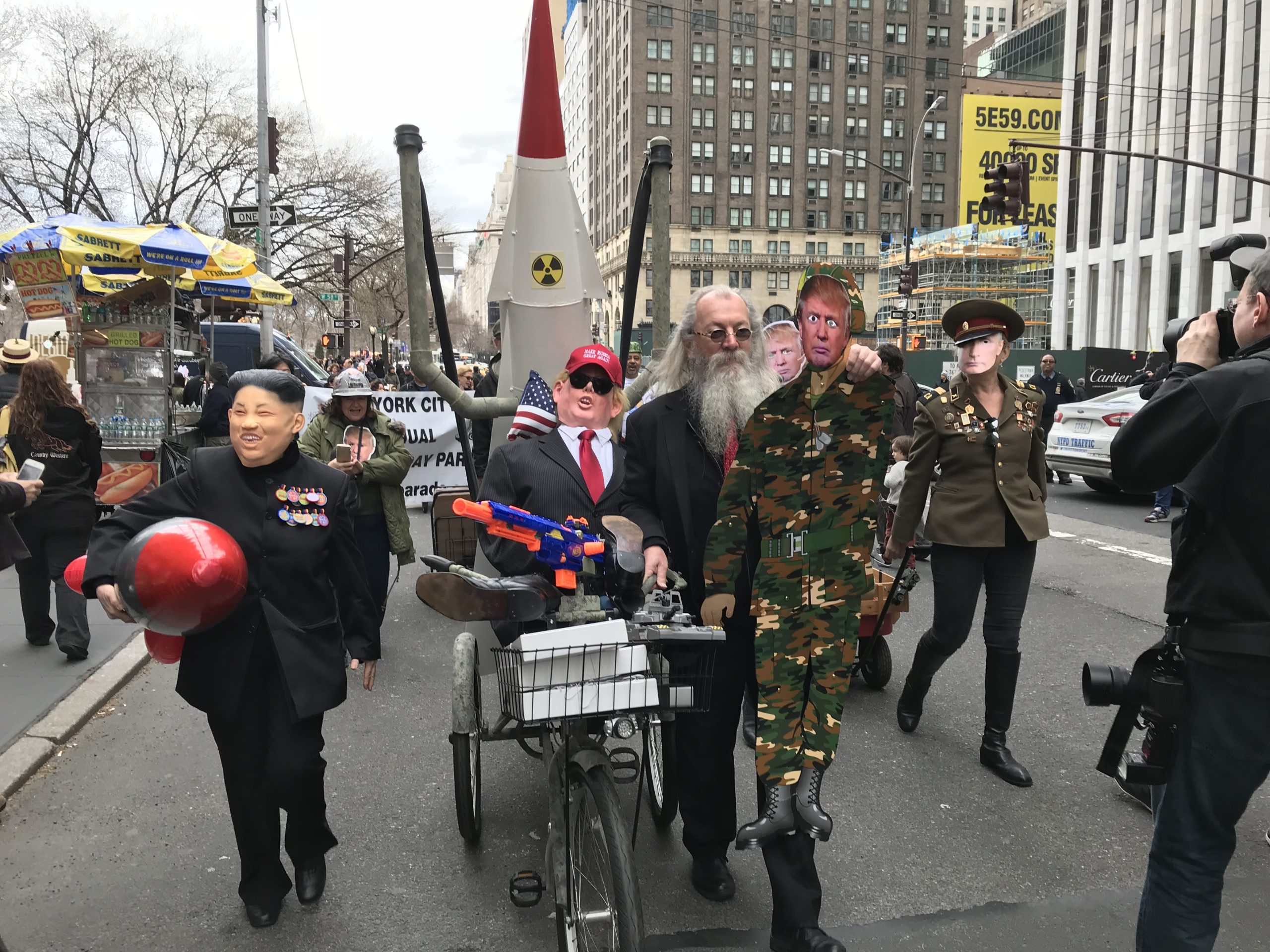
Artist and activist Joey Skaggs has been inviting members of the New York City media to his annual April Fools’ Day parade along Fifth Avenue since 1986.
Press releases archived on Skaggs’ website describe the event as an attempt to “bring people back in touch with their inherent foolishness” and celebrate “the public’s right to laugh in the face of authority.” Past parades have included a President Donald Trump look-alike contest and a Y2K-themed end-of-the-world party. This year’s press release invites participants to ponder “what’s real and what’s not” at a parade led by the president himself, followed by a screening of the “Melania mockumentary” and a reading of all redacted names in the Jeffrey Epstein files, other than victims.