Right-Wing Website Dosed With Own Medicine

The op-ed site Quillette has risen to prominence in the Trump-era conservative firmament by condemning progressive orthodoxies around race and gender, providing a platform for accused sexual predators, defending “Google Memo” author James “Fired4Truth” Damore, and promoting the “Sokal Squared” hoax, an effort to discredit academic disciplines by categorizing them as “grievance studies.”

This week, the site took a blow to its own credibility when left-aligned mischief-maker “Archie Carter” submitted a critique of the Democratic Socialists of America littered with lies, cliches, and errata. The piece was promptly published and promptly retracted by Quillette, leaving leftist publications Alternet and Jacobin (along with broad swaths of Twitter) to gloat over the fallout.

Will Sommer, a journalist/provocateur focused on far-right movements, scored an interview with the hoaxer.


Quillette Duped by Left-Wing Hoaxer Posing as Communist Construction Worker
by Will Sommer
The Daily Beast
August 9, 2019

Construction worker and avowed Leninist Archie Carter has plenty of gripes with the Democratic Socialists of America, the left-wing group that’s enjoyed a new wave of popularity during the Trump era.

In an essay published Thursday on the conservative op-ed website Quillette, Carter declared that DSA had been overrun with overeducated, oversensitive college graduates, blinding itself to the true needs of the working class.

“DSA is doomed,” Carter wrote.

Carter’s piece seemed like exactly the kind of argument that’s turned Quillette, a self-described “platform for free thought,” into a hotbed for the right-wing online “Intellectual Dark Web” movement. Carter had impeccable blue-collar bona fides, with his Quillette bio describing him as a committed union member who’s always “watching the Mets blow a lead.”

But there’s one problem with Carter’s story: He doesn’t exist.

DSA members started picking holes in Carter’s story almost as soon it went live on Quillette. New York City’s DSA local couldn’t find any record of a member, current or former, named Archie Carter. And while Carter claimed to have participated in sit-in protests as part of his DSA work, the group hadn’t organized sit-ins in New York in years.

By Thursday evening, Quillette had retracted Carter’s essay, saying Carter had failed to “supply answers to our follow-up questions in timely fashion.” Read more.

Citroën’s WWII Subterfuge Remembered

True or not, this is an inspiring bit of sabotage.


Citroën Sabotaged Wartime Nazi Truck Production in a Simple and Brilliant Way
by Jason Torchinsky
Jalopnik.com
July 24, 2019

Citroen

In case you forgot to change the batteries in your calendar, you may not be aware that this year is the 100th anniversary of Citroën. We’ve been shooting a Jason Drives special mini-series for this centenary, and while doing some research I happened to stumble upon a fascinating bit of wartime Citroën lore. It involves screwing with Nazis in a genuinely clever and subtle way that nevertheless had big repercussions. I’ll explain.

So, when France was occupied by the Germans in 1940, major French factories like Citroën were forced to produce equipment for the Nazis. Citroën president Pierre-Jules Boulanger knew he couldn’t just refuse to produce anything, but he also knew there’s no way in hell he’s going to just roll over and build trucks for a bunch of filthy Nazis. Pierre had a plan.

John Reynolds’ book Citroën 2CV describes Boulanger’s sabotage efforts. Of course, he instructed workers to set a nice, leisurely pace when building trucks (likely Citroën T45 trucks) for the Wermacht, but that’s fairly obvious. What was brilliant was Boulanger’s idea to move the little notch on the trucks’ oil dipsticks that indicated the proper level of oil down just a bit lower.

By moving the notch down, the trucks would not have enough oil, but German mechanics would have no idea, because, hey, the little notch on the dipstick says its just fine. Then, after the truck has been used for a while and is out deployed somewhere crucial, whammo, the engine seizes up, and you’ve got a lot of angry, stranded, vulnerable Nazis, balling up their little fists and redly barking curses in German.

It’s such a fantastic act of sabotage: it’s extremely cheap to implement, it’s subtle, there’s no way to see something amiss is happening as the trucks are being built, and it delivers its blow away from the site of the sabotage and when it will cause the most inconvenience and trouble.

I suppose it could be apocryphal, but this is one of those cases where I’m going to choose to believe.

That’s some mighty good sabotaging, Pierre.

Political Prank Topples the Austrian Government. Joey Skaggs Swears He Didn’t Do It! [English and German]

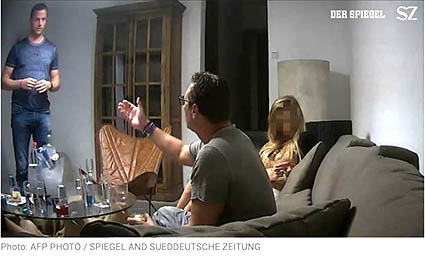
Joey Skaggs visited Vienna, Austria, in June. Coincidentally, a surreptitiously filmed video had just been released showing the far-right Freedom Party’s leader and then vice chancellor of the Austrian government, Heinz-Christian Strache, scheming to overthrow the rest of the government.

In the video, Strache, thinking he’s talking to the niece of a wealthy Russian oligarch with connections in high places, offers her a controlling share in a national newspaper and sweetheart construction contracts in return for hefty (and illegal) campaign donations. Turns out she wasn’t who she said she was and the video shows him to be an ambitious, scheming fool.

The video caused a loss of confidence in the entire Austrian government and resulted in its total collapse. In essence, the Austrian government had just been toppled by a prank. What timing. Joey swears he had nothing to do with this!

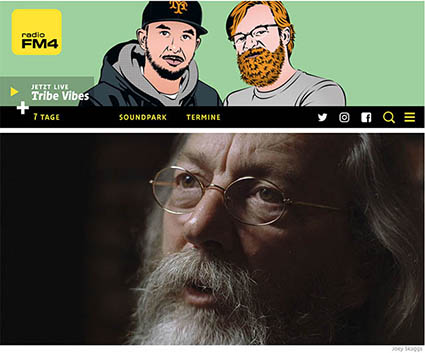
Joey’s presentation at FH-Wien University in Vienna prompted interviews with FM4, Austria’s national radio network, and NJOY 91.3, the FH-Wien University radio station. It was a great opportunity for him to talk about the power of the political prank, President Trump’s fixation with “fake news”, and the unsettling potential of deepfakes, which he had predicted in a 1986 interview in Pranks! (RE/Search No. 11). Check out page 41.

The FM4 radio interview with Felix Diewald is no longer available, however its web page (in German) is terrific.

The NJOY 91.3 radio interview with Michel Mehle is fun and edifying. It starts out in German and switches to English at 2:11.

In Review: April Fools’ Day 2019 Branding, Marketing, and Media Stunts

Before April Fools’ Day 2019 even began, the tech giant Microsoft announced that it would not be indulging in any branded foolishness this year. And that sort of set the tone for the day.

From the rise of the internet and social media through the election of Donald Trump, distinguishing truth from fiction in the online landscape has become less about comedy and more about horror. Even the cutest and cleverest April Fools’ publicity stunts are not as well received as they may have been in the past. The overall online mood is darker, more skittish, and more reflective. Still, there’s still some levity to be found in the chaos and desperation.

A few editorials addressed the cynicism and fatigue around April Fools’ Day from high-level perspectives.

Of the branded pranks that did go down, the most interesting had satirical or meta-comedic elements.

Others were just plain, dumb, silly, marginally self-aware fun. Here are the best of the rest:

And there was even some good news!

As with any holiday, the best way to spend April Fools’ Day is probably not on the internet, but engaged in revelry and camaraderie IRL, fighting the forces of oppression and no-fun-ness in the company of loved ones and loved ones you haven’t met yet. So naturally the best news of the day was the annual April Fools’ Day Parade – see the highlights [HERE].

Confessions of a Rock and Roll Poser

Last autumn, Jered “Threatin” Eames staged the most alienating, least explicable rock tour stunt since the Sex Pistols hit the deep south. He recently broke his silence.


“The Great Heavy Metal Hoax”
by David Kushner
Rolling Stone
December 14, 2018

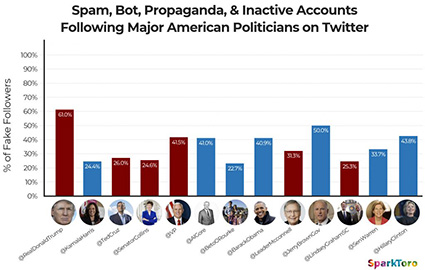
In November, managers of rock clubs across the United Kingdom began sharing the same weird tale. A pop-metal performer, Threatin, had rented their clubs for his 10-city European tour. Club owners had never heard of the act when a booking agent approached them promising packed houses. Threatin had fervent followers, effusive likes, rows of adoring comments under his YouTube concert videos, which showed him windmilling before a sea of fans. Websites for the record label, managers and a public-relations company who represented Threatin added to his legitimacy. Threatin’s Facebook page teemed with hundreds of fans who had RSVP’d for his European jaunt, which was supporting his album, Breaking the World.

But despite all the hype, almost no one came to the shows. It was just Threatin and his three-piece band onstage, and his wife, Kelsey, filming him from the empty floor. And yet Threatin didn’t seem to care — he just ripped through a set as if there was a full house. When confronted by confused club owners, Threatin just shrugged, blaming the lack of audience on bad promotion. “It was clear that something weird was happening,” says Jonathan “Minty” Minto, who was bartending the night Threatin played at the Exchange, a Bristol club, “but we didn’t realize how weird.” Intrigued, Minto and his friends started poking around Threatin’s Facebook page, only to find that most of the fans lived in Brazil. “The more we clicked,” says Minto, “the more apparent it became that every single attendee was bogus.”

It all turned out to be fake: The websites, the record label, the PR company, the management company, all traced back to the same GoDaddy account. The throngs of fans in Threatin’s concert videos were stock footage. The promised RSVPs never appeared. When word spread of Threatin’s apparent deception, club owners were perplexed: Why would someone go to such lengths just to play to empty rooms? Read more.