
How false information creates true events

From monochrom: An article by Klaus Schoenberger — who is doing pop-culture research at the University of Hamburg, Germany — featuring the Yes Men and their Union Carbide/Bhopal hoax in 2004.


Activists use fakes and hoaxes to communicate information by speaking in the name of someone else – persons or institutions invested with power. With the spreading of Internet communication, this pattern of action and communicating has acquired additional power as a means of political and social protest. Within the framework of Guerrilla Communication, with its specific understanding of politics, faking develops into an efficient form of political articulation.

Read the entire article here.


Editor’s note: See also April Media Fools, March 30, 2005, by Rory O’Connor for MediaChannel.org
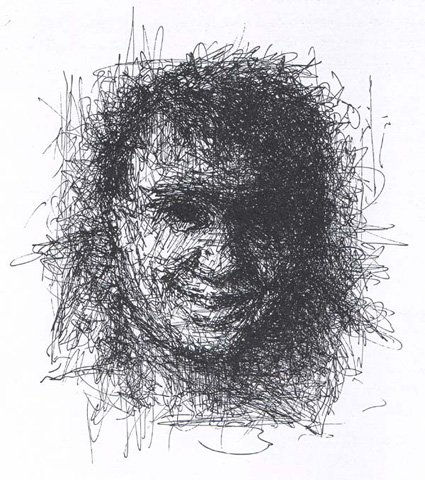
monochrom’s Georg Paul Thomann

Self Portrait, Georg Paul ThomannIn 2002, the art group monochrom was invited to represent the Republic of Austria at the Sao Paulo Art Biennial in Sà£o Paulo, Brazil, one of the three biggest international art exhibitions in the world. The group, citing political reasons, did not wish to represent Austria directly and decided instead to send the 57 year old avant-garde artist Georg Paul Thomann.

Some doubt that Georg Paul Thomann actually existed. Some say he was an art avatar, pure fiction; that it was a political, tactical approach of monochrom to solve the philosophical and bureaucratic dilemma caused by the art world’s system of representation.

But those people have to consider that the official catalogue included the biography of Georg Paul Thomann; that journalists interviewed him, although most of the time he was sitting in his hotel room and watching the porn channel; that Georg Paul Thomann saved the country of Taiwan and caused diplomatic troubles with China; and, that after all that, he died, was buried and you can still visit his tombstone. A person who exists cannot not exist.

Read the full story here; here; and here.